
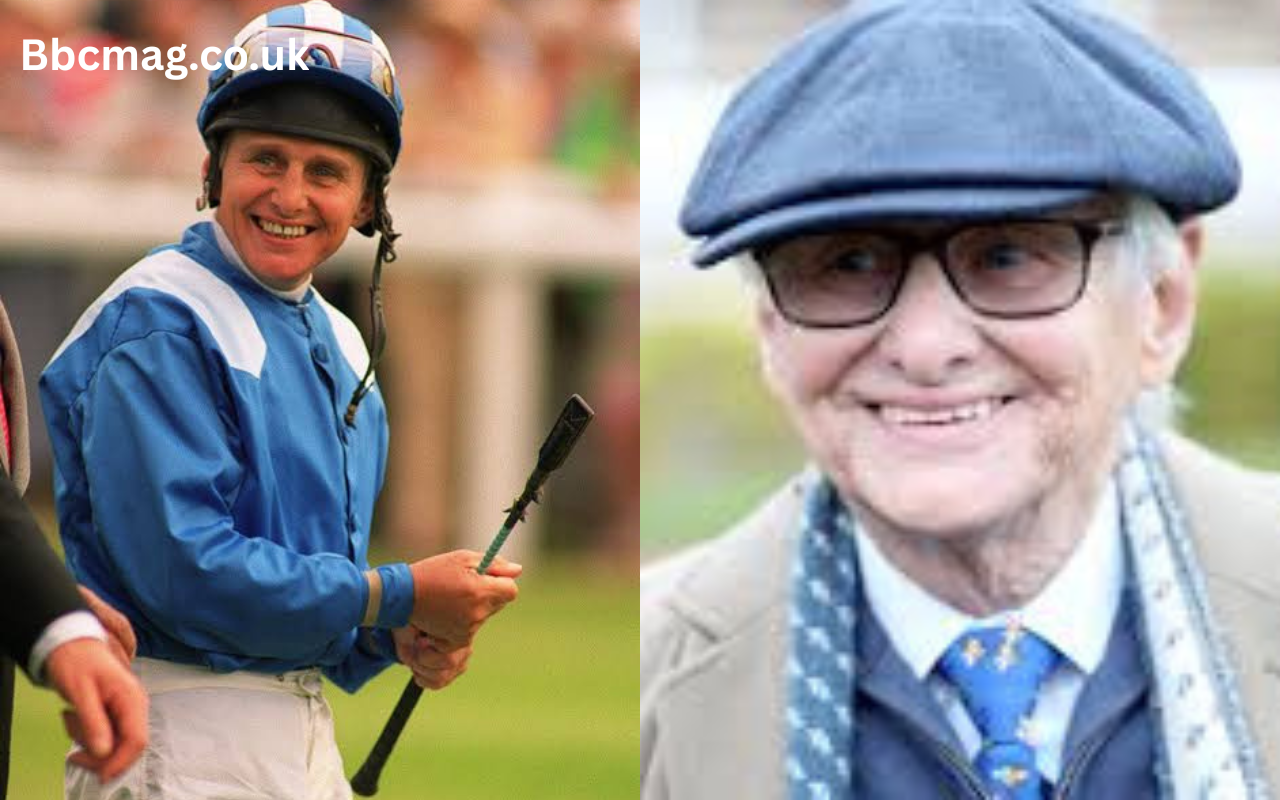
Horse racing has produced countless talented jockeys over the decades, but only a select few have earned legendary status through consistency, courage, and extraordinary success. Among those elite names, Willie Carson stands as one of the greatest figures the sport has ever seen. With an incredible career spanning more than three decades, Carson became known not only for winning some of the biggest races in Britain and Europe but also for his fearless riding style, unmatched determination, and deep understanding of Thoroughbred racing. His remarkable achievements transformed him into one of Britain’s most celebrated sports personalities and secured his place among the all-time greats of horse racing.
Table of Contents
ToggleThroughout his career, Willie Carson built a reputation for delivering under pressure. Whether competing in prestigious Classic races or guiding champion horses to unforgettable victories, he consistently demonstrated why he was trusted by the finest trainers and owners in the industry. His partnership with legendary trainer Dick Hern and his success aboard horses like Nashwan, Troy, Dayjur, and Salsabil remain defining moments in British Flat racing history. Even after retiring from competitive riding, Carson continued contributing to horse racing as a breeder, broadcaster, and ambassador for the sport.
Today, Willie Carson is remembered not simply as a champion jockey but as a symbol of perseverance, professionalism, and sporting excellence. His journey from a young Scottish boy with big dreams to becoming one of Britain’s most successful jockeys continues to inspire racing enthusiasts around the world. His story is one of hard work, resilience, and a lifelong passion for horses that has never faded.
| Fact | Details |
|---|---|
| Full Name | William Fisher Hunter Carson |
| Popular Name | Willie Carson |
| Date of Birth | 16 November 1942 |
| Age | 83 (as of 2026) |
| Birthplace | Stirling, Scotland |
| Nationality | Scottish |
| Profession | Former Thoroughbred Flat Racing Jockey, Broadcaster, Horse Breeder |
| Height | Approximately 5 ft (152 cm) |
| Parents | Tommy Carson (father), May Carson (mother) |
| Siblings | Not publicly documented |
| Marital Status | Married |
| Wife | Elaine Williams |
| Children | Three sons (Anthony, Neil, and Ross) |
| Estimated Net Worth | Approximately $5–10 million (estimated) |
| Major Honors | OBE, British Champions Series Hall of Fame, Scottish Sports Hall of Fame |
| No verified public account | |
| X (Twitter) | No verified public account |
| No verified personal public account |
Early Life and Family Background
Willie Carson was born as William Fisher Hunter Carson on 16 November 1942 in Stirling, Scotland, during a period when Britain was still experiencing the effects of World War II. Unlike many famous jockeys who grew up in racing families, Carson came from a completely ordinary working-class household. His father, Tommy Carson, worked as a warehouseman for the fruit company Fyffes, while his mother, May Carson, worked as a waitress. Horses were not part of the family’s daily life, making Willie’s rise to racing greatness even more extraordinary.
As a child, Willie was noticeably smaller than many of his classmates. His short stature often made him the target of teasing, but it also unknowingly prepared him for a future career in horse racing. Rather than allowing bullying to affect his confidence, his father encouraged him to learn self-defense and develop resilience. These early lessons helped shape Carson into the fiercely competitive individual he would later become on the racecourse. The determination he displayed throughout his riding career had its roots in these formative years.
Interestingly, Carson’s interest in horse racing did not begin through family tradition. Instead, it was sparked by the 1954 film The Rainbow Jacket, which told the story of a young jockey chasing success. Inspired by what he saw on screen, Willie began taking riding lessons, cycling long distances to improve his skills. His natural balance and enthusiasm soon caught the attention of instructor Thea MacFarlane, who believed he possessed genuine talent. She wrote to several racing trainers seeking an apprenticeship for the young Scot, a decision that would change his life forever.
Career Beginnings and Rise in British Horse Racing
Willie Carson’s professional journey officially began when he joined the stable of Captain Gerald Armstrong in Middleham, North Yorkshire, as an apprentice. Although he entered the racing world full of enthusiasm, success did not arrive overnight. The early years were physically demanding and mentally challenging, as young apprentices were expected to care for horses, complete stable duties, and earn opportunities to ride in competitive races. Carson later admitted that he struggled during the beginning of his career and needed years of patience before becoming a confident jockey. His determination, however, never wavered, and every setback became a lesson that strengthened his skills.
His first British winner finally came on 19 July 1962 when he rode Pinker’s Pond to victory at Catterick Bridge Racecourse. That breakthrough marked the beginning of one of the greatest careers in British Flat racing history. Once Carson gained confidence, he steadily attracted the attention of respected trainers who admired his balance, tactical awareness, and relentless work ethic. During the late 1960s, his reputation grew rapidly as he became known for giving maximum effort in every race, regardless of the horse’s reputation or the size of the event.
The turning point arrived in 1972, a year that completely transformed his career. Carson guided High Top to victory in the prestigious 2,000 Guineas, earning his first British Classic success. In the same season, he claimed his first British Champion Jockey title with an outstanding 132 winners. That remarkable achievement established him among Britain’s elite riders and proved that the determined young apprentice from Scotland had become one of the finest jockeys in the country.
Becoming One of Britain’s Greatest Champion Jockeys
Winning the 1972 championship was only the beginning. Willie Carson successfully defended his title in 1973, demonstrating that his previous success had not been a one-season achievement. Over the following decade, he continued to dominate British Flat racing, eventually winning the Champion Jockey title five times in 1972, 1973, 1978, 1980, and 1983. His consistency, professionalism, and ability to perform under pressure earned widespread admiration from owners, trainers, fellow jockeys, and racing fans alike.
One of the defining features of Carson’s career was his distinctive riding style. Standing only about five feet tall, he combined exceptional strength with remarkable balance and an energetic “push-kick-push” technique that became instantly recognizable on racecourses across Britain. Despite suffering numerous serious injuries—including broken bones, a fractured skull, and spinal injuries—he repeatedly returned to competition with incredible determination. His resilience became one of his defining qualities, proving that success in horse racing depends as much on courage and mental toughness as it does on natural talent.
Throughout his career, Carson rode 3,828 winners in Britain, placing him among the most successful jockeys in British racing history. He surpassed the milestone of 100 winners in a season an extraordinary 23 times, an achievement that reflects decades of remarkable consistency at the highest level of the sport. Even as younger riders emerged, Carson continued competing with the same enthusiasm and commitment that had defined his earliest days as an apprentice.
Partnership with Dick Hern and Legendary Racehorses
One of the greatest chapters in Willie Carson’s career began when he became the retained jockey for the legendary trainer Dick Hern. Their partnership developed into one of the most successful trainer-jockey combinations in modern British horse racing. Hern entrusted Carson with many of his finest Thoroughbreds, and together they achieved victories that are still celebrated by racing enthusiasts today. Their professional relationship was built on mutual trust, exceptional communication, and a shared commitment to excellence.
Carson enjoyed unforgettable success aboard several world-class horses. Among them was Troy, who captured the 1979 Epsom Derby in spectacular fashion before adding victories in the Irish Derby, King George VI and Queen Elizabeth Stakes, and Juddmonte International Stakes. He later won another Derby with Henbit in 1980, reinforcing his reputation as one of the finest riders of Classic horses. These victories placed Carson firmly among the elite jockeys capable of delivering on racing’s biggest stages.
Perhaps the horse most closely associated with Carson’s career was the magnificent Nashwan. In 1989, the pair made history by winning the 2,000 Guineas, Epsom Derby, Eclipse Stakes, and King George VI and Queen Elizabeth Stakes in the same season. Carson later described Nashwan as one of the greatest horses he had ever ridden. Other outstanding champions he partnered included Dayjur, one of the world’s fastest sprinters, and Salsabil, whose Classic victories further enhanced Carson’s remarkable legacy.
Major Achievements, Awards, and Racing Legacy
Willie Carson’s list of accomplishments places him among the greatest jockeys in the history of British horse racing. During an extraordinary professional career that lasted more than three decades, he rode 3,828 winners in Britain, captured 17 British Classic races, and claimed victory in over 100 Group 1 races across Europe. His ability to perform consistently at the highest level, season after season, made him one of the most respected names in Thoroughbred racing. His finest statistical season came in 1990, when he rode 187 winners, a remarkable achievement that demonstrated his enduring excellence even in the later stages of his career.
Carson’s success was recognized with numerous prestigious honors. In 1983, he was appointed an Officer of the Order of the British Empire (OBE) for his outstanding services to horse racing. Decades later, his legendary career received further recognition when he was inducted into the QIPCO British Champions Series Hall of Fame, joining an elite group of the sport’s greatest jockeys. He is also a member of the Scottish Sports Hall of Fame, honoring his achievements as one of Scotland’s most accomplished sporting figures.
Among his many memorable milestones were becoming the first Scottish jockey to win the British Champion Jockey title, riding six winners at a single Newcastle meeting in 1990, and winning the Queen Elizabeth II Stakes a record eight times during his career. These accomplishments reflect not only his remarkable talent but also his consistency and longevity in one of the world’s most demanding sports. Even decades after retiring, many racing historians continue to rank Willie Carson alongside the greatest jockeys ever to ride in Britain.
Personal Life, Family, and Life Beyond Racing
Away from the racecourse, Willie Carson has always valued family life. He married Carol Spares in 1963, and the couple had three sons—Anthony, Neil, and Ross—before divorcing in 1979. In 1982, he married Elaine Williams, who has been his partner both personally and professionally. Together they developed Minster Stud in Gloucestershire into a respected Thoroughbred breeding operation, continuing Carson’s lifelong involvement with horses long after his retirement from competitive racing.
One of the most remarkable aspects of Carson’s post-racing career is his success as a breeder. He purchased his first broodmare in 1969 after receiving advice from trainer Bernard van Cutsem, and that investment eventually grew into one of Britain’s respected breeding establishments. In 1988, Carson achieved a unique distinction by breeding and riding Minster Son to victory in the St Leger, making him the only known jockey in the modern era to breed and ride a Classic winner. Over the years, Minster Stud has produced numerous successful racehorses, highlighting Carson’s exceptional knowledge of bloodlines and Thoroughbred development.
Outside racing, Carson also became a familiar face on British television. He worked as a racing presenter and commentator for the BBC, often alongside broadcaster Clare Balding, helping introduce millions of viewers to the sport. His friendly personality and expert insights made him a respected television figure. He also served as chairman of Swindon Town F.C. from 2001 to 2007, demonstrating his passion for sport beyond horse racing.
Net Worth, Income Sources, Social Media, and Recent Updates
Willie Carson’s estimated net worth is believed to be between $5 million and $10 million, although no official figure has been publicly confirmed. His wealth has been built over several decades through prize earnings as a champion jockey, retained riding contracts with leading owners, television broadcasting, racehorse breeding, and the continued success of Minster Stud. Unlike many athletes whose careers end after retirement, Carson successfully transitioned into breeding and bloodstock, creating multiple long-term income streams within the racing industry.
Although many modern sporting personalities actively use social media, Willie Carson has chosen a far more private approach. He does not maintain verified public accounts on platforms such as Instagram, X (formerly Twitter), Facebook, or LinkedIn. Instead, fans usually follow his activities through horse racing organizations, industry publications, interviews, and major racing events where he continues to appear as a respected ambassador for the sport. His preference for privacy reflects a generation of sports stars who built their reputations long before the rise of social media.
Even in recent years, Carson has remained closely connected to the Thoroughbred industry. In 2026, news from the breeding world highlighted that one of his mares at Minster Stud became the first successfully scanned in foal to the young stallion Royal Scotsman, demonstrating that Carson continues to play an active role in British horse breeding. More than two decades after retiring from the saddle, he remains an influential figure whose knowledge and experience continue to shape the future of the sport.
Retirement, Lasting Influence, and Legacy
Willie Carson officially retired from race riding in 1996, bringing the curtain down on one of the most distinguished careers in British Flat racing. By the time he stepped away from competitive riding, he had established records and achievements that very few jockeys have matched. Retirement, however, did not mean leaving the racing world behind. Instead, Carson shifted his focus toward Thoroughbred breeding, racehorse ownership, television broadcasting, and mentoring, allowing him to continue contributing to the sport that had defined his life for more than three decades. His transition demonstrated that true champions continue to make an impact long after their competitive careers end.
Carson’s influence extends far beyond the impressive number of winners he rode. Generations of jockeys have studied his tactical intelligence, competitive spirit, and exceptional balance in the saddle. Trainers frequently praised his ability to understand a horse’s strengths and weaknesses, while owners valued his honesty and professionalism. Throughout his career, he earned a reputation as someone who prepared thoroughly for every race and always gave his best effort, whether competing in a local handicap or a prestigious Classic. Those qualities made him not only a champion jockey but also a respected ambassador for British horse racing.
Even today, Carson remains a familiar and respected figure at major racing events. He regularly shares his experience through interviews, media appearances, and expert analysis, offering valuable insights into horses, trainers, and racing tactics. During Royal Ascot 2026, for example, he provided race predictions and reflected on how the exciting filly Venetian Sun reminded him of the legendary sprinter Dayjur, one of the greatest horses he ever rode. These appearances highlight that his knowledge of Thoroughbred racing remains as sharp as ever and that his voice continues to carry significant weight within the industry.
Conclusion
Willie Carson’s remarkable journey is one of determination, resilience, and unwavering passion for horse racing. From his humble beginnings in Stirling, Scotland, to becoming a five-time British Champion Jockey and one of the sport’s most decorated riders, he proved that talent combined with hard work can overcome even the greatest obstacles. His victories aboard legendary horses, his long-standing partnership with top trainers, and his outstanding record of 3,828 British winners have secured his place among the greatest jockeys in racing history.
Beyond statistics and trophies, Carson’s legacy is built on integrity, professionalism, and a lifelong dedication to the Thoroughbred industry. His success as a breeder, racehorse owner, broadcaster, and Hall of Fame member demonstrates that his contribution to horse racing did not end when he retired from the saddle. Instead, he has continued to inspire owners, trainers, jockeys, and racing enthusiasts with his knowledge, experience, and commitment to excellence. Whether discussing future champions or developing quality bloodlines at Minster Stud, Carson remains an influential figure whose passion for the sport is as strong as ever.
As Willie Carson continues to contribute to British horse racing, his story stands as a powerful reminder that greatness is built through perseverance, discipline, and an enduring love for one’s craft. His extraordinary career has inspired countless aspiring jockeys and racing fans around the world, proving that true success is measured not only by victories but also by the lasting impact a person leaves on their profession. Willie Carson’s legacy will continue to influence future generations, ensuring that his name remains synonymous with excellence, courage, and sporting achievement for many years to come.
