
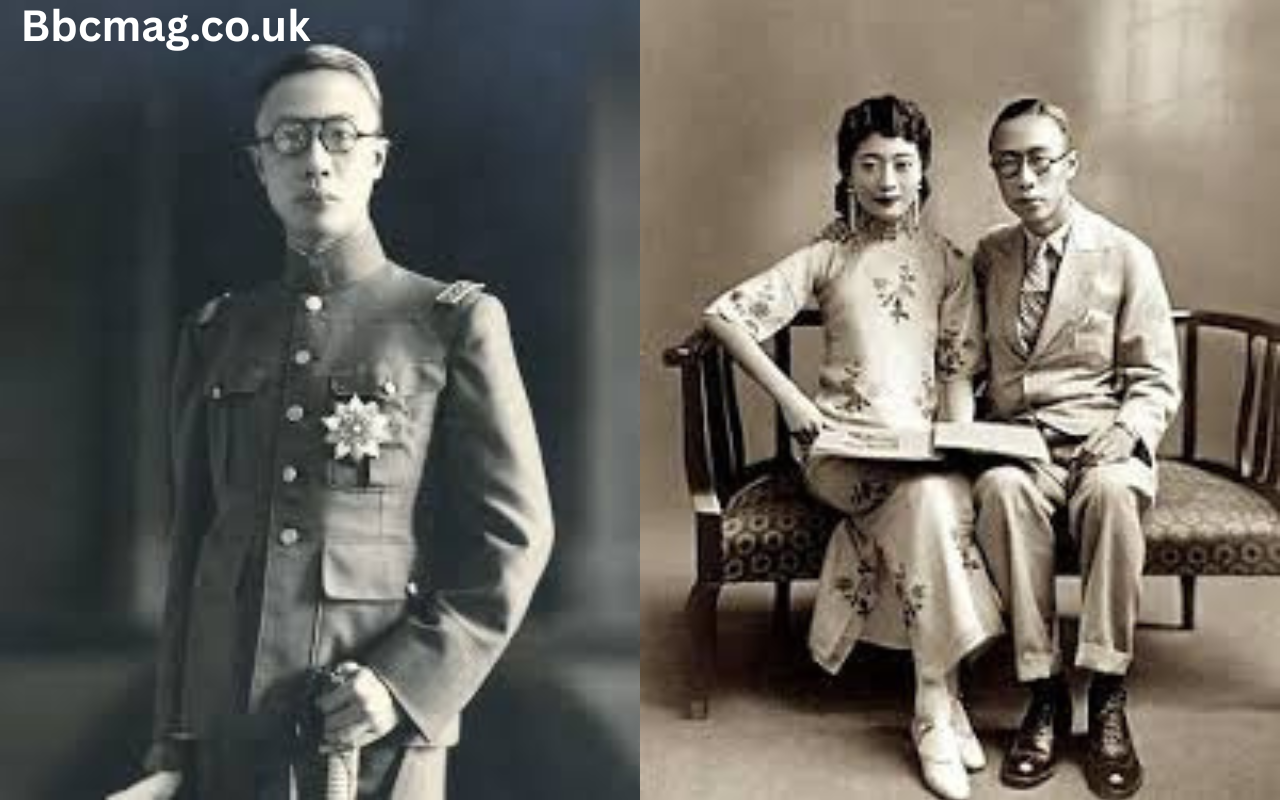
Few historical figures have experienced a life as dramatic and symbolic as Puyi, the last emperor of China. Crowned as a toddler, removed from power before he could understand the throne, restored briefly, made the ruler of a Japanese-controlled puppet state, imprisoned as a war criminal, and finally transformed into an ordinary citizen, Puyi witnessed the end of more than two thousand years of imperial rule. His remarkable journey reflects the political upheaval, cultural transformation, and human resilience that defined modern Chinese history. Even decades after his death, historians, filmmakers, and readers around the world continue to study his extraordinary life because it tells the story not only of one man but also of an entire nation undergoing profound change.
Table of Contents
ToggleRather than following the traditional path of a powerful monarch, Puyi spent much of his life adapting to circumstances beyond his control. His childhood was shaped by palace rituals, strict traditions, and isolation inside Beijing’s Forbidden City. As China embraced republican ideals and later faced foreign occupation and civil conflict, Puyi found himself caught between competing political forces. His experiences reveal the challenges of leadership, identity, and survival during one of the most turbulent periods in Chinese history.
Puyi Quick Facts
| Information | Details |
|---|---|
| Full Name | Aisin-Gioro Puyi |
| Common Name | Puyi |
| Imperial Title | Xuantong Emperor |
| Profession | Last Emperor of China, Former Emperor of Manchukuo |
| Born | 7 February 1906 |
| Died | 17 October 1967 (aged 61) |
| Birthplace | Beijing, Qing China |
| Nationality | Chinese |
| Dynasty | Qing Dynasty |
| Father | Zaifeng, Prince Chun |
| Mother | Youlan |
| Siblings | Younger brother: Pujie; several younger siblings |
| Education | Traditional Confucian education with palace tutors |
| Marital Status | Married five times during his lifetime |
| Children | None |
| Religion | Influenced by traditional Chinese and Buddhist beliefs |
| Estimated Net Worth | Not applicable; former imperial wealth was lost after the fall of the Qing Dynasty |
| None | |
| Twitter/X | None |
| None | |
| None |
Early Life and Royal Family Background
Puyi was born on 7 February 1906 into the prestigious Aisin-Gioro imperial family, which had ruled China through the Qing Dynasty since the seventeenth century. His father, Zaifeng, Prince Chun, belonged to one of the highest-ranking branches of the imperial family, while his mother, Youlan, came from the influential Guwalgiya clan. From birth, Puyi lived in an environment filled with royal customs, political expectations, and centuries-old traditions that emphasized loyalty, discipline, and respect for imperial authority.
Although born into privilege, Puyi’s childhood changed dramatically before he reached the age of three. In November 1908, after the deaths of the Guangxu Emperor and the powerful Empress Dowager Cixi, the toddler was selected to become China’s next emperor. Palace officials arrived unexpectedly at his family residence and took the frightened child to the Forbidden City, separating him from his parents. According to Puyi’s own later recollections, he cried and resisted because he did not understand why he was being taken away from his family.
The transition from ordinary family life to imperial life was immediate and permanent. Once inside the Forbidden City, Puyi became the center of an enormous court governed by strict etiquette. Every movement, conversation, and ceremony followed centuries-old traditions. Even his parents had to treat him according to imperial protocol during official visits, creating emotional distance within the family despite their close relationship before his coronation.
Education and Life Inside the Forbidden City
Although Puyi held the highest title in the Qing Empire, his childhood was far from ordinary. He grew up inside Beijing’s Forbidden City, a vast imperial palace that had been home to Chinese emperors for centuries. Every aspect of his daily routine was governed by strict court etiquette. Hundreds of eunuchs, servants, guards, and court officials attended to his needs, yet genuine affection and normal childhood experiences were largely absent. As emperor, everyone around him bowed before him, but very few dared to treat him like a child. This unusual upbringing left him isolated from the outside world and emotionally dependent on a small number of trusted attendants.
Puyi received a traditional Confucian education, which emphasized the Chinese classics, history, moral philosophy, calligraphy, and imperial customs. His lessons focused on preparing him to become a wise ruler according to ancient Chinese traditions rather than introducing him to modern subjects such as science, mathematics, or world geography. In his later autobiography, Puyi admitted that his education was extremely limited by modern standards. He recalled knowing very little about the world beyond the palace walls because his tutors concentrated almost entirely on preserving imperial traditions instead of preparing him for a rapidly changing twentieth century.
A major turning point in his education came in 1919 when Scottish scholar and diplomat Reginald Johnston became his tutor. Johnston introduced the young former emperor to English, Western history, international politics, literature, and modern scientific ideas. He also encouraged Puyi to wear eyeglasses after discovering his poor eyesight, brought him books from abroad, and exposed him to technologies such as bicycles and telephones. Their relationship broadened Puyi’s understanding of the outside world and helped him realize how dramatically China and the international community had changed while he remained confined within the Forbidden City.
Daily Life as a Child Emperor
Life inside the Forbidden City revolved around strict rituals rather than personal freedom. Every morning began with formal ceremonies, meetings with senior palace officials, and carefully scheduled lessons. Even meals followed elaborate customs that had developed over hundreds of years. While these traditions emphasized the dignity of the emperor, they also created a lonely environment where genuine friendships were rare and nearly every interaction followed rigid rules of protocol.
Puyi later admitted that unlimited authority at such a young age affected his behavior. Because palace servants were expected to obey every command without question, he often developed a sense of entitlement. In his memoirs, he described childish acts of cruelty toward some eunuchs, behavior that he later regretted deeply. These memories reveal how growing up without normal parental guidance or social interaction shaped his personality during childhood.
Despite living among thousands of people, Puyi frequently felt alone. His beloved wet nurse, Wang Lianshou, became one of the few people who offered him genuine affection and discipline. When she was forced to leave the palace, Puyi was devastated, and he later described the experience as one of the greatest emotional losses of his childhood. The separation highlighted how isolated his imperial life had become and how desperately he longed for normal family relationships.
The Fall of the Qing Dynasty and Abdication
While Puyi was still a small child, China was experiencing enormous political unrest. Reformers and revolutionaries increasingly criticized the Qing government, arguing that the centuries-old imperial system could no longer meet the needs of a modern nation. Economic difficulties, foreign intervention, military defeats, and growing nationalist movements weakened public confidence in the dynasty, setting the stage for dramatic political change.
The Xinhai Revolution began in October 1911 and quickly spread across China. Provincial leaders declared independence from the Qing government, and revolutionary forces gained momentum. Recognizing that continued resistance could plunge the country into a prolonged civil war, influential political leaders negotiated terms for the imperial family’s surrender. On 12 February 1912, Empress Dowager Longyu signed the abdication edict on behalf of the six-year-old Puyi, officially ending more than 260 years of Qing rule and over two millennia of imperial government in China.
Although he was no longer emperor in a political sense, Puyi was allowed to continue living inside the Forbidden City under special agreements with the new Republic of China. He retained his imperial title, ceremonial privileges, and an annual government allowance, while real political power passed to the republican government. This unusual arrangement allowed the former emperor to continue living within the palace walls for another decade, preserving many imperial traditions even as China entered a completely new political era.
Expulsion from the Forbidden City and Life in Tianjin
For more than a decade after his abdication, Puyi remained inside the Forbidden City under the terms of the “Articles of Favorable Treatment.” Although he no longer ruled China, he continued to live as a ceremonial emperor surrounded by palace attendants, eunuchs, and members of the former imperial court. This unusual arrangement allowed many Qing traditions to survive even as the Republic of China established itself outside the palace walls. However, political instability during the warlord era eventually brought this unique chapter to an end.
In October 1924, the warlord Feng Yuxiang seized control of Beijing during the Beijing Coup. Soon afterward, he canceled the special privileges previously granted to the Qing imperial family. Puyi was informed that he had only a short time to leave the Forbidden City, the place that had been both his home and prison since early childhood. The departure was emotional and historic, marking the final end of imperial life within China’s most famous palace. After nearly sixteen years behind its walls, Puyi stepped into a completely different world.
Following his expulsion, Puyi first stayed briefly with his father before accepting protection from the Japanese Legation in Beijing. He later settled in the Japanese concession in Tianjin, a modern port city where he experienced a lifestyle vastly different from palace life. Surrounded by foreign influence, automobiles, electricity, cinemas, and Western fashion, Puyi embraced many aspects of modern living while continuing to dream of restoring the Qing monarchy.
A Former Emperor Searching for Power
Life in Tianjin exposed Puyi to international politics in ways he had never experienced inside the Forbidden City. Diplomats, military officers, businessmen, and political figures regularly visited the foreign concessions. Puyi became increasingly interested in global affairs and maintained contact with Chinese warlords, monarchists, and Japanese officials, hoping someone might help him reclaim the imperial throne. Despite these ambitions, most Chinese political leaders had little interest in restoring the monarchy.
During these years, Puyi adopted a more modern lifestyle. He wore Western-style suits, collected expensive watches, enjoyed automobiles, and furnished his residence with imported goods. His Scottish tutor, Reginald Johnston, had already encouraged him to appreciate Western education and technology, and now Puyi had the freedom to experience those influences directly. Yet beneath the appearance of comfort, he remained deeply frustrated by the loss of his political authority and continued searching for an opportunity to return to power.
His marriage to Empress Wanrong also became increasingly strained during this period. The pressures of exile, uncertainty about the future, and growing dependence on Japanese support placed enormous stress on the imperial household. Personal relationships deteriorated as political ambitions took priority, foreshadowing the even greater challenges that lay ahead.
Emperor of Manchukuo Under Japanese Control
The turning point in Puyi’s later life came after Japan occupied Manchuria following the Mukden Incident in 1931. The Japanese military established the new state of Manchukuo in northeastern China and presented it to the international community as an independent nation. In reality, however, it functioned largely under Japanese control. Because Puyi remained a powerful symbol of the former Qing Dynasty, Japanese leaders believed he could give legitimacy to their new government.
In 1932, Puyi accepted Japan’s invitation to become the Chief Executive of Manchukuo. Two years later, in 1934, he was formally proclaimed Emperor under the reign title Kangde. Although the ceremonies resembled those of the Qing emperors, the reality was very different. Major political, military, and economic decisions were controlled by Japanese officials, leaving Puyi with little genuine authority. He occupied an imperial palace, but his power existed largely on paper.
Living in Changchun, the capital of Manchukuo, Puyi increasingly realized that he was being carefully monitored. Japanese advisers controlled access to him, supervised official meetings, and expected him to approve policies that had already been decided. His movements were restricted, and even public appearances were carefully planned. Although he wore the robes of an emperor once again, he privately understood that he had become a symbolic figure serving another nation’s political ambitions.
Challenges and Decline of Manchukuo
As the Second Sino-Japanese War expanded after 1937, Manchukuo became an important base for Japan’s military operations in Asia. Puyi hoped that loyal service might eventually persuade Japan to restore him as emperor of all China, but those expectations were never fulfilled. Japanese leaders viewed him primarily as a useful political symbol rather than an independent monarch capable of exercising real authority.
Within the imperial palace, Puyi’s personal life also became increasingly difficult. His relationship with Empress Wanrong deteriorated significantly, and she struggled with severe opium addiction and declining health. Political isolation, emotional stress, and constant surveillance affected nearly everyone in the royal household. Puyi himself later admitted that these years were among the unhappiest of his life because he realized he possessed the title of emperor without the freedom or authority traditionally associated with it.
By 1945, Japan’s defeat in the Second World War brought Manchukuo to a sudden end. As Soviet forces invaded Manchuria, Puyi attempted to flee the region, hoping to escape to Japan. Before he could leave, however, he was captured by the Soviet Red Army. This marked the collapse of his second reign and the beginning of an entirely new chapter—one that would transform the former emperor into a prisoner and eventually an ordinary citizen.
Soviet Captivity and the Tokyo War Crimes Tribunal
In August 1945, as the Soviet Union declared war on Japan and launched its invasion of Manchuria, Puyi attempted to flee the collapsing state of Manchukuo. His plan was to escape to Japan by air, but before he could leave, Soviet forces captured him at an airfield. For a man who had once occupied imperial palaces, the experience marked a dramatic reversal of fortune. Instead of living as an emperor, he became a prisoner of war under Soviet custody, beginning another unexpected chapter in his remarkable life.
The Soviets transferred Puyi first to Chita in Siberia and later to Khabarovsk near the Chinese border. Although he was technically a prisoner, he was treated relatively well compared to many other wartime detainees. He was provided accommodation, food, and access to books, while several former servants remained with him. During these years, Puyi spent much of his time reflecting on the dramatic rise and fall of his life, reading extensively, and wondering what his future would hold. According to his autobiography, he even wrote several letters asking Soviet leader Joseph Stalin to allow him to remain permanently in the Soviet Union because he feared returning to China.
One of the most important events during his Soviet captivity occurred in August 1946, when Puyi testified before the International Military Tribunal for the Far East, commonly known as the Tokyo War Crimes Tribunal. His testimony described Japan’s creation of Manchukuo and explained how Japanese military authorities exercised real power while he served mainly as a symbolic ruler. His evidence became part of the historical record concerning Japan’s occupation of Manchuria and the political circumstances surrounding the puppet state.
Imprisonment and Political Re-Education in China
After the founding of the People’s Republic of China in 1949, negotiations between the new Chinese government and the Soviet Union resulted in Puyi’s return to China in 1950. He expected to face execution because many former collaborators had received severe punishments after the war. Instead, he was sent to the Fushun War Criminals Management Centre, where the Communist government introduced a rehabilitation program designed to reform former Japanese collaborators and officials through education, self-reflection, and labor.
Life inside Fushun was unlike anything Puyi had previously experienced. For the first time, he had to perform ordinary tasks without imperial servants waiting on him. He learned to clean, make his own bed, wash his clothes, and participate in manual labor. Prison officials encouraged inmates to examine their past actions honestly, accept responsibility, and understand the consequences of their political decisions. Puyi later wrote that these years profoundly changed his character, replacing the sense of entitlement he had developed during childhood with humility and appreciation for ordinary life.
The rehabilitation program lasted almost a decade. Chinese leaders viewed Puyi as an important symbol because if the last emperor could be successfully reformed, it demonstrated the government’s belief that even those associated with the old imperial system could become productive citizens. His transformation from monarch to ordinary worker became one of the most widely discussed examples of political rehabilitation in modern Chinese history.
Release and a New Beginning
In 1959, Puyi received a special pardon approved by Mao Zedong, ending nearly nine years of imprisonment. After his release, he returned to Beijing with little personal wealth and no political influence. Instead of reclaiming his former status, he embraced an ordinary civilian life that would have seemed unimaginable during his childhood as emperor.
Puyi initially worked as a gardener at the Beijing Botanical Gardens, where he cared for flowers, trees, and plants. Friends and colleagues later remembered him as polite, modest, and eager to learn practical skills. Ironically, he often said that working among plants brought him a greater sense of peace than ruling from magnificent palaces ever had. Later, he also worked as an editor for the Chinese People’s Political Consultative Conference, participating in historical and literary projects while continuing his personal transformation.
During this period, Puyi also revisited the Forbidden City—not as its ruler, but as a tourist. Visitors reportedly found it remarkable that the former emperor walked through the palace explaining which rooms he had once lived in and identifying objects that had belonged to him during childhood. The contrast between his former life and his new role as an ordinary citizen highlighted one of history’s most extraordinary personal transformations.
Net Worth and Sources of Wealth
Estimating Puyi’s net worth is difficult because his life was unlike that of any modern public figure. As emperor, he had access to the immense wealth, treasures, palaces, and resources of the Qing imperial court. However, these assets belonged to the dynasty and the Chinese state rather than to him personally. Following the fall of the Qing Dynasty in 1912, much of the imperial family’s financial support came through an annual allowance provided by the Republic of China. Over time, these privileges were reduced and eventually ended after his expulsion from the Forbidden City in 1924.
During his years as the ruler of Manchukuo, Puyi lived in luxurious surroundings and enjoyed many royal privileges, but historians generally agree that real financial and political control rested with the Japanese authorities. After World War II, he lost virtually everything. Following his imprisonment and later pardon, he earned a modest living as a gardener and later as an editor in Beijing. Unlike many former monarchs in world history, Puyi did not spend his final years surrounded by wealth. Instead, he lived as an ordinary citizen, relying on a regular salary and modest government support.
His autobiography, From Emperor to Citizen, became one of his most significant literary contributions and remains an important historical source for understanding both his personal experiences and the dramatic transformation of twentieth-century China. Although the book generated considerable interest, Puyi never accumulated great personal wealth. Today, historians view his legacy as far more valuable than any financial fortune he once possessed.
Social Media Presence
Puyi lived from 1906 to 1967, long before the rise of the internet and social media platforms. As a result, he never had official accounts on Instagram, X (formerly Twitter), Facebook, LinkedIn, YouTube, or any other digital platform. His story, however, continues to reach millions of people through museums, documentaries, books, educational websites, and historical films.
Modern audiences often discover Puyi through Bernardo Bertolucci’s Academy Award-winning film The Last Emperor, which introduced his extraordinary life to viewers around the world. Historians, educators, and museums also regularly share photographs, historical documents, and discussions about his life across digital platforms, ensuring that his remarkable journey remains accessible to new generations.
Although Puyi himself never interacted with an online audience, his autobiography, historical records, and surviving photographs continue to inspire researchers and history enthusiasts. His life remains one of the most studied examples of how an individual’s destiny can become inseparable from the rise and fall of an empire.
Death and Enduring Legacy
In his final years, Puyi lived quietly in Beijing as an ordinary citizen while China’s Cultural Revolution began to reshape the country’s political and cultural landscape. Although he faced criticism because he symbolized the old imperial system, government protection spared him from some of the harsher treatment experienced by others associated with the former Qing Dynasty. His health gradually declined, and on 17 October 1967, Puyi died in Beijing at the age of 61 from complications related to kidney cancer and heart disease. He was cremated according to the laws of the People’s Republic of China, and his ashes were later reinterred near the Western Qing Tombs.
Puyi’s historical significance extends far beyond his titles. He was the final emperor of a dynasty that had ruled China since 1644 and the last sovereign monarch in a tradition spanning more than two thousand years of imperial history. His life reflected the collapse of monarchy, the rise of republicanism, foreign occupation, global war, communist revolution, and the birth of modern China. Few individuals have personally experienced so many dramatic political transformations within a single lifetime.
Today, scholars continue to debate many aspects of Puyi’s decisions and responsibilities, particularly his role in Manchukuo. Nevertheless, most historians agree that his autobiography and personal experiences provide an invaluable perspective on one of the most turbulent periods in Chinese history. His story remains essential reading for anyone seeking to understand the end of imperial China and the complex relationship between power, identity, and historical change.
Conclusion
Puyi’s life is one of history’s most extraordinary personal journeys. Crowned as China’s emperor before his third birthday, stripped of his throne while still a child, restored as a symbolic ruler under foreign occupation, imprisoned after World War II, and ultimately transformed into an ordinary citizen, he experienced more dramatic changes than almost any other modern historical figure. His remarkable story mirrors China’s own transformation from an ancient imperial civilization into a modern nation, making him an enduring symbol of both the end of one era and the beginning of another.
Beyond the political events that defined his life, Puyi’s greatest legacy lies in his personal transformation. His willingness to reflect on his past, document his experiences honestly, and adapt to an entirely different way of life demonstrates an uncommon capacity for growth. His autobiography continues to help historians understand not only the collapse of the Qing Dynasty but also the human side of one of the most significant political transitions in world history.
As Puyi’s story continues to educate and inspire people around the world, it serves as a powerful reminder that status, privilege, and power are often temporary, while resilience, self-reflection, and the ability to embrace change leave a far more lasting legacy. His extraordinary journey—from emperor to ordinary citizen—stands as one of the most compelling biographies in modern history and continues to offer timeless lessons about leadership, humility, perseverance, and the ever-changing course of history.
