
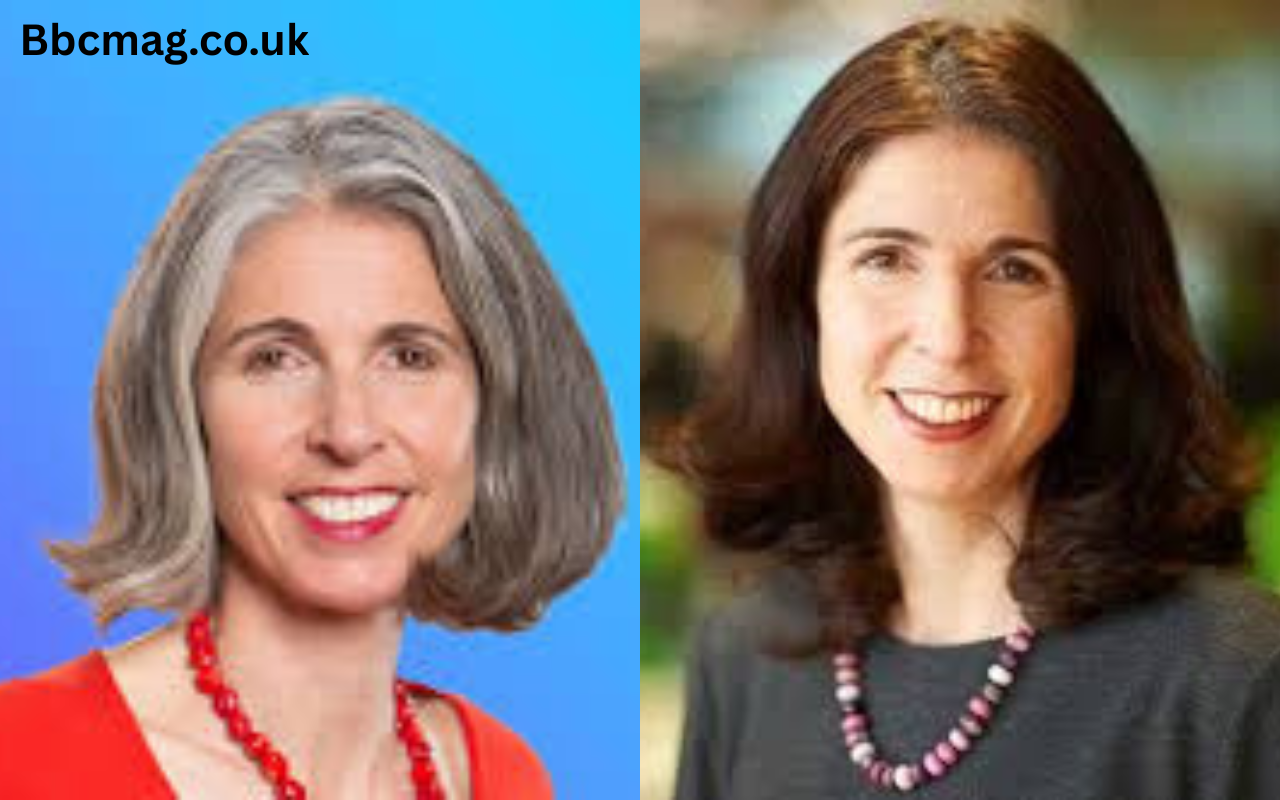
Early Life and Family Background
Rain Newton-Smith was born in 1975 in the United Kingdom and grew up in a home where education, ideas, and intellectual curiosity were part of everyday life. She was raised by parents who were both deeply connected to academic and creative work, which naturally shaped the way she viewed the world. Her father, William Newton-Smith, was a respected Canadian-born Oxford philosopher, while her mother, Dorris Heffron, was a children’s author known for thoughtful and engaging writing. This environment gave Rain a strong foundation built on learning, reflection, and discipline.
Table of Contents
ToggleGrowing up in such a household meant that discussions about society, politics, literature, and ethics were likely common. Rather than being pushed toward one fixed path, she developed the confidence to think independently and critically. This early exposure to serious ideas helped shape her calm, analytical style, which later became one of her strongest professional qualities. It also explains why she would eventually choose economics—not just as a career, but as a tool for understanding people and systems.
Her childhood was not built around celebrity attention or public fame. Instead, it was grounded in education, values, and intellectual growth. That quieter beginning gave her the ability to focus on substance over appearance, a trait that continues to define her leadership today. Even in powerful executive roles, she remains known more for thoughtful action than for self-promotion.
Education and Academic Journey
Rain Newton-Smith pursued higher education at the University of Oxford, where she studied Philosophy, Politics, and Economics (PPE), one of the most respected degree programs in the UK. PPE is known for producing leaders in politics, economics, and business because it combines critical thinking with practical understanding of how societies function. For Rain, this course gave her the perfect balance between theory and real-world relevance.
After Oxford, she continued her academic development at the London School of Economics (LSE), where she completed a Master of Science in Economics. This step allowed her to deepen her understanding of financial systems, macroeconomics, policy decisions, and international markets. Her move from Oxford to LSE showed not only ambition but also a clear professional direction toward serious economic leadership.
Her connection to education did not end after graduation. She later became a Policy Fellow with the Department of Economics at Oxford, maintaining strong links with academic research and public policy thinking. This ongoing relationship with learning shows that she sees education as a lifelong process rather than a finished chapter.
Starting Her Career in Economics
Rain began her professional journey at the Bank of England, one of the most influential financial institutions in the country. She spent around nine years there, working on global forecasts for the Monetary Policy Committee. This role placed her close to some of the most important financial decisions affecting the UK economy, including interest rates, inflation planning, and broader monetary strategy.
Working at the Bank of England gave her firsthand experience of how policy decisions affect businesses, workers, and families across the country. She was not simply studying economics from a distance—she was helping shape the analysis behind major national decisions. This experience gave her strong credibility and built the technical foundation for the rest of her career.
During this period, she was also seconded to the International Monetary Fund (IMF) in Washington, D.C. This international experience expanded her understanding of global finance and policy cooperation between countries. It gave her a broader perspective and helped her become comfortable working across borders and economic systems.
Key early career strengths:
- Central banking experience
- Global policy exposure
- Strong macroeconomic analysis
- International financial understanding
Oxford Economics and Global Expertise
After her work at the Bank of England and IMF, Rain moved into the private sector and became Head of Emerging Markets at Oxford Economics. In this role, she focused heavily on fast-growing economies, particularly China, and studied how global trade flows affected business decisions and national growth.
This was a major turning point because it moved her from central banking into business forecasting and international strategy. Understanding emerging markets is one of the most valuable skills for economic leaders, especially in a world where trade relationships shape political and financial stability. Her work made her a recognized expert on global business risks and opportunities.
She gained a reputation for explaining complex global shifts in ways that business leaders could actually use. Instead of abstract theory, she focused on practical economic insight. This ability to connect analysis with action became one of the defining strengths of her career and later made her highly valuable to the CBI.
Her First Major Role at the CBI
In 2014, Rain Newton-Smith joined the Confederation of British Industry (CBI) as Chief Economist. This role placed her at the center of British business policy, where she advised major companies and worked closely with HM Treasury. She became responsible for leading economic analysis, policy strategy, and the CBI’s broader engagement with national business concerns.
Her years as Chief Economist were especially important because they covered some of the most difficult economic periods in recent history. She helped businesses navigate Brexit uncertainty, post-pandemic recovery, inflation pressures, and climate transition challenges. Her voice became one of the most trusted in UK business commentary because she combined realism with practical optimism.
She also led the CBI’s international work around B7 and B20 global business leadership forums. This strengthened her profile beyond the UK and showed her ability to represent British business on an international stage. She was not only an economist behind the scenes—she became a visible public leader.
Barclays and Return to the CBI
Before returning to the CBI as Chief Executive, Rain briefly joined Barclays as Managing Director for Strategy, Policy, Sustainability, and ESG. This role aligned closely with her growing focus on climate responsibility, sustainable finance, and long-term corporate governance. It also showed how highly respected she had become in both banking and policy circles.
However, in April 2023, the CBI faced a major leadership crisis and urgently needed trusted leadership. Rain returned to the organization as Chief Executive, stepping into one of the most challenging moments in its history. Her appointment was widely seen as a stabilizing decision because she understood both the institution and the wider business community.
This was more than a career move—it was a leadership test. She had to rebuild trust, restore confidence, and guide the CBI through public scrutiny. Her willingness to take on that responsibility showed courage and long-term commitment rather than personal comfort.
Leadership Style and Public Reputation
Rain Newton-Smith is often described as calm, strategic, and deeply thoughtful. Unlike leaders who rely on dramatic public appearances, she is respected for careful judgment and strong policy understanding. Her style is based on trust, evidence, and long-term thinking rather than short-term headlines.
She often speaks about sustainable growth, responsible business leadership, and the need for cooperation between government and private enterprise. Her public interviews show a leader focused not just on profits, but on how businesses can improve society. She strongly believes that climate goals and economic success should work together rather than compete.
This balanced leadership approach has helped her become one of the most credible voices in British business. She is often invited to major policy events, economic forums, and sustainability summits where her perspective helps shape future planning across industries.
Leadership qualities people admire:
- Clear economic thinking
- Calm decision-making
- Strong sustainability focus
- Inclusive and modern leadership
Awards and Recognition
In 2012, the World Economic Forum recognized Rain Newton-Smith as a Young Global Leader, a major international honor given to people seen as future changemakers in business, policy, and society. This award placed her among a global network of high-impact leaders and confirmed her growing influence early in her executive journey.
She has also served on important boards and advisory groups, including the F&C Investment Trust and educational institutions like Eynsham Partnership Academy. These positions reflect trust in her judgment beyond economics alone. She is valued not only for technical knowledge but also for governance and strategic thinking.
Recognition for her work is often based on substance rather than publicity. She is not known for chasing awards, yet her professional reputation continues to grow because of consistent results and respected leadership. That quiet credibility is often more powerful than public fame.
Personal Life and Family
Despite holding one of the most important business leadership roles in Britain, Rain Newton-Smith keeps her personal life relatively private. She is married and is the mother of four daughters. She has described herself as balancing executive leadership with motherhood, showing that ambition and family life can exist together rather than in conflict.
She lives in West Oxfordshire, where family remains an important part of her daily life. Her personal values strongly reflect care, responsibility, and long-term thinking—the same values visible in her professional work. She is often described as someone passionate about wellbeing, biodiversity, and creating better systems for future generations.
Her grounded personal life helps explain her leadership style. She approaches policy not as numbers alone, but as decisions that affect real families and communities. That human perspective makes her work more relatable and more impactful.
Net Worth and Sources of Income
Rain Newton-Smith’s estimated net worth is believed to be between $2 million and $5 million, although exact figures are not publicly disclosed. Her financial success comes from decades of senior leadership in economics, finance, and corporate strategy rather than entertainment or celebrity fame.
Her income sources include executive salaries from the CBI, Barclays, and previous roles in Oxford Economics and the Bank of England. In addition, she likely earns through board memberships, advisory responsibilities, speaking engagements, and policy fellowships. These are common income streams for senior business leaders of her level.
What makes her financial story notable is that it reflects expertise, trust, and professional influence. Her wealth was built through knowledge and leadership, showing that long-term credibility can be just as valuable as public visibility.
Social Media Presence and Public Voice
Rain Newton-Smith uses social media mainly as a professional platform rather than for personal lifestyle sharing. Her strongest presence is on LinkedIn, where she discusses economic policy, sustainability, trade, investment, and leadership challenges facing modern businesses.
She is not highly active on Instagram, and her public image is much more focused on ideas than personal branding. Her communication style is clear, direct, and policy-driven, which matches her reputation as a serious executive leader. She uses digital platforms to inform and engage rather than to entertain.
This professional use of social media strengthens her credibility. Instead of building fame, she builds trust. Her audience includes business leaders, policymakers, economists, and professionals looking for thoughtful leadership insights.
Conclusion
Rain Newton-Smith’s journey is a powerful example of what modern leadership looks like when it is built on intelligence, integrity, and purpose. From her academic beginnings at Oxford and LSE to leading the CBI during one of its most difficult periods, she has shown that true influence comes from responsibility, not just authority.
Her career proves that economics is not only about numbers—it is about people, choices, and the future we create together. Whether guiding businesses through crisis, supporting sustainable growth, or speaking for climate-conscious leadership, she continues to shape important conversations across the UK and beyond.
As Rain Newton-Smith leads the way for future generations, her story stands as a reminder of how resilience and purpose can shape a meaningful legacy. Her path inspires us to believe that thoughtful leadership, strong values, and long-term vision can leave a lasting impact on both business and society.
