
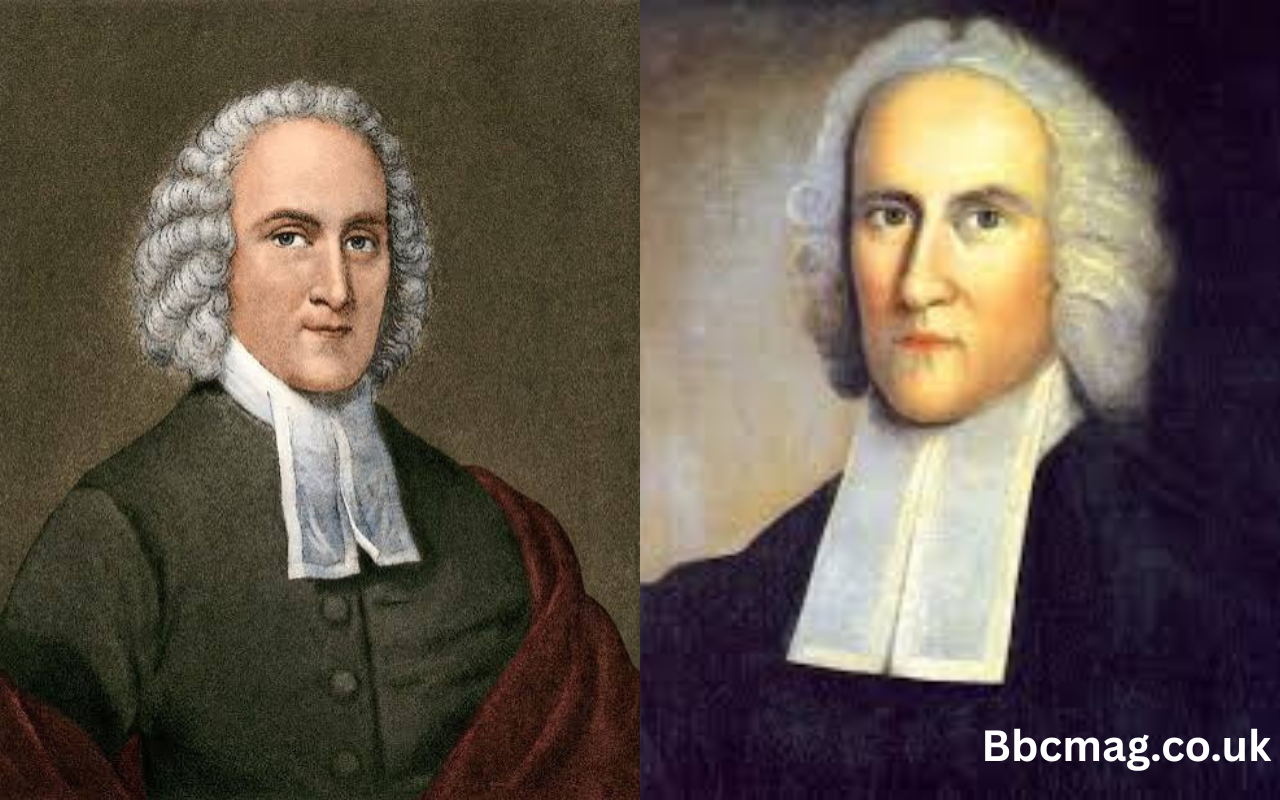
Jonathan Edwards remains one of the most influential religious thinkers in American history. More than two centuries after his death, his sermons, theological writings, and philosophical ideas continue to inspire scholars, pastors, historians, and readers across the world. Best known for his famous sermon Sinners in the Hands of an Angry God, Edwards was far more than a passionate preacher. He was an intellectual giant, a philosopher, a revival leader, and a devoted pastor whose ideas helped ignite the First Great Awakening in colonial America. His remarkable ability to combine deep theological reasoning with heartfelt spiritual conviction made him a unique figure whose influence stretches far beyond the eighteenth century. Today, Jonathan Edwards is remembered not only for his powerful preaching but also for helping shape American religious identity and leaving behind one of the richest collections of Christian literature ever produced in the English language.
Table of Contents
Toggle| Quick Facts | Details |
|---|---|
| Full Name | Jonathan Edwards |
| Born | October 5, 1703 |
| Died | March 22, 1758 |
| Age at Death | 54 years |
| Profession | Theologian, Philosopher, Congregational Pastor, Missionary |
| Nationality | American (Colonial America) |
| Birthplace | East Windsor, Connecticut, British America |
| Education | Yale College |
| Father | Timothy Edwards |
| Mother | Esther Stoddard Edwards |
| Siblings | 10 sisters (Jonathan was the only son) |
| Wife | Sarah Pierpont Edwards |
| Children | 11 |
| Famous For | First Great Awakening, Sinners in the Hands of an Angry God |
| Religion | Congregationalist (Puritan) |
| Estimated Net Worth | Not applicable (18th-century minister) |
| None | |
| X (Twitter) | None |
| None | |
| None |
Early Life and Family Background
Jonathan Edwards was born on October 5, 1703, in East Windsor, Connecticut, during the colonial period of British America. He grew up in a deeply religious household where faith, education, and discipline were considered essential parts of everyday life. His father, Timothy Edwards, served as a respected Congregational minister, while his mother, Esther Stoddard Edwards, came from one of New England’s most influential religious families. This environment surrounded Jonathan with biblical teaching and intellectual discussion from an early age.
Being the only son among eleven children gave Jonathan a unique position within his family. His parents quickly recognized his remarkable intelligence and encouraged his curiosity. Unlike many children of his time, he spent countless hours reading books, observing nature, and asking difficult philosophical questions. These early experiences helped develop the analytical mind that would later distinguish him as one of America’s greatest thinkers.
Even as a young boy, Edwards demonstrated extraordinary academic ability. He became fascinated with science, philosophy, astronomy, and theology. His youthful essays revealed a level of intellectual maturity rarely seen among children. His observations about spiders, insects, and the natural world reflected his belief that creation itself pointed toward God’s wisdom and creativity, a theme that would continue throughout his life.
Education and Intellectual Development
Jonathan Edwards entered Yale College before reaching his teenage years, an achievement that highlighted his exceptional academic gifts. At Yale, he immersed himself in classical languages, philosophy, logic, mathematics, and theology. His education introduced him to influential thinkers such as John Locke, whose writings on human understanding greatly shaped Edwards’ philosophical approach.
Rather than viewing philosophy and religion as opposing forces, Edwards believed they complemented one another. He sought to explain Christian beliefs using careful reasoning while maintaining complete confidence in Scripture. This balanced approach allowed him to become both an intellectual philosopher and an evangelical preacher, a combination that was uncommon during his era.
His years at Yale also marked an important period of spiritual growth. Edwards experienced what he described as a profound personal conversion, leading him to develop a lifelong commitment to Christian faith. This experience transformed his understanding of grace and became central to his later sermons and writings, influencing generations of theologians after him.
Beginning His Ministry and Pastoral Calling
After completing his education, Jonathan Edwards began preaching in New York before accepting a position assisting his grandfather, Solomon Stoddard, in Northampton, Massachusetts. When Stoddard passed away in 1729, Edwards succeeded him as pastor of one of the most respected churches in New England.
His early ministry focused on biblical teaching, pastoral care, and encouraging genuine spiritual transformation. Unlike ministers who emphasized outward religious behavior alone, Edwards believed authentic Christianity required an inward change of heart. His sermons challenged listeners to examine their relationship with God rather than relying solely on church attendance or religious traditions.
Although Edwards possessed an extraordinary intellect, his preaching remained deeply practical. He carefully explained theological concepts while applying them to everyday life. His calm speaking style contrasted sharply with the emotional reactions his sermons often produced, demonstrating the powerful impact of his carefully crafted messages.
Jonathan Edwards and the First Great Awakening
Jonathan Edwards became one of the leading figures of the First Great Awakening, a widespread religious revival that transformed colonial America during the 1730s and 1740s. This movement emphasized personal conversion, heartfelt faith, and spiritual renewal instead of merely following religious customs. Edwards’ ministry played a central role in encouraging these revivals throughout New England.
One of the defining moments of his career came with the publication and delivery of Sinners in the Hands of an Angry God in 1741. The sermon vividly described humanity’s dependence upon God’s mercy and urged listeners to seek genuine repentance. Although often remembered for its dramatic imagery, the sermon ultimately emphasized hope through God’s grace rather than fear alone.
The Great Awakening permanently changed American Christianity by encouraging individuals to pursue a personal relationship with God. Edwards defended the revival movement while also warning against emotional excesses and false religious experiences. His balanced perspective helped preserve the movement’s credibility and theological foundation.
Major Writings and Lasting Contributions
Jonathan Edwards produced an extraordinary body of work that continues to be studied by theologians, historians, philosophers, and students worldwide. His books explored topics including religious experience, free will, original sin, salvation, and the nature of true virtue. Many scholars regard him as America’s greatest theological writer.
Among his most influential works are:
- Sinners in the Hands of an Angry God (1741)
- Religious Affections (1746)
- Freedom of the Will (1754)
- The End for Which God Created the World
- The Nature of True Virtue
His writings combined careful philosophical reasoning with profound biblical insight. Rather than separating intellect from faith, Edwards argued that true understanding of God involved both thoughtful reflection and heartfelt devotion. This unique approach continues to influence evangelical theology, Reformed scholarship, and Christian philosophy around the world.
Marriage, Family, and Personal Life
Jonathan Edwards married Sarah Pierpont in 1727. Their marriage became widely admired for its strong spiritual foundation, mutual respect, and shared commitment to ministry. Sarah was known for her wisdom, kindness, and deep Christian faith, providing invaluable support throughout Jonathan’s demanding career.
Together they raised eleven children despite the many challenges of eighteenth-century colonial life. Edwards viewed family life as an extension of his ministry, emphasizing education, prayer, discipline, and moral development within the home. His letters reveal genuine affection for his wife and children, offering a more personal glimpse into the man behind the famous sermons.
Outside his pastoral responsibilities, Edwards enjoyed studying nature, reading philosophy, and writing extensively. He maintained detailed journals and spent countless hours reflecting upon theological questions. His disciplined daily routine reflected remarkable dedication to both intellectual excellence and spiritual growth.
Challenges, Controversies, and Later Years
Despite his influence, Jonathan Edwards’ ministry was not without conflict. Over time, disagreements emerged between Edwards and members of his Northampton congregation concerning church membership and participation in communion. Edwards insisted that church membership should require evidence of genuine Christian conversion, a position that proved unpopular with many longtime members.
In 1750, after years of increasing disagreement, the congregation voted to dismiss him as pastor. Although this decision represented a painful personal setback, Edwards accepted it with humility and continued serving faithfully. Rather than abandoning ministry, he accepted a missionary position among Native American communities in Stockbridge, Massachusetts.
During this quieter period, Edwards produced some of his greatest theological works. His intellectual productivity actually increased after leaving Northampton, demonstrating remarkable resilience. His ability to continue writing and serving despite disappointment remains one of the most inspiring aspects of his life.
President of Princeton and Final Days
In 1758, Jonathan Edwards accepted the position of president of the College of New Jersey, now known as Princeton University. His appointment reflected the widespread respect he had earned as both a scholar and spiritual leader. Although he had hoped to continue writing, he accepted the responsibility out of a sense of duty.
Shortly after arriving at Princeton, Edwards received a smallpox inoculation, a relatively new medical practice intended to prevent the disease. Unfortunately, complications developed, and his health rapidly declined. He died on March 22, 1758, at just fifty-four years of age.
Although his presidency lasted only a few weeks, his influence on Princeton and American higher education remained significant. His commitment to combining faith with intellectual excellence continues to shape Christian education centuries later.
Net Worth, Influence, and Modern Legacy
Because Jonathan Edwards lived during the colonial era, modern estimates of personal wealth do not meaningfully apply. He earned modest financial support through pastoral ministry, missionary work, and educational positions rather than commercial enterprises. Therefore, assigning a modern net worth would be historically inaccurate.
His true wealth lies in his extraordinary intellectual and spiritual legacy. His books remain widely published, translated, and studied across universities, seminaries, and churches throughout the world. Numerous academic institutions, research centers, and theological societies continue preserving and examining his extensive writings.
Edwards’ influence extends beyond religion into philosophy, ethics, psychology of religion, literature, and American history. His work continues to inspire scholars interested in revival movements, Puritan theology, Christian spirituality, and the relationship between reason and faith.
Social Media Presence and Continued Relevance
Jonathan Edwards lived more than 250 years before the invention of the internet and social media. Consequently, he has no official Instagram, Facebook, X (formerly Twitter), LinkedIn, or YouTube accounts.
Nevertheless, his ideas remain remarkably active in today’s digital world. Universities, theological organizations, churches, and educational institutions regularly share his sermons, quotations, and writings through online platforms. Digital archives have made thousands of pages from his manuscripts available to readers around the globe, introducing his work to entirely new generations.
Modern podcasts, documentaries, online courses, and scholarly conferences continue examining his life and thought. His enduring popularity demonstrates that meaningful ideas can transcend centuries and remain relevant despite dramatic cultural change.
Conclusion
Jonathan Edwards stands among the most remarkable intellectual and spiritual figures in American history. His extraordinary combination of theological depth, philosophical brilliance, pastoral compassion, and unwavering commitment to truth established a legacy that continues influencing Christianity, higher education, and religious scholarship worldwide. From his remarkable childhood in colonial Connecticut to his leadership during the First Great Awakening, Edwards consistently pursued a deeper understanding of faith and encouraged others to do the same.
Although his ministry included personal disappointments and public controversy, he never abandoned his commitment to thoughtful scholarship or faithful service. His sermons challenged hearts, his books shaped minds, and his ideas continue inspiring meaningful conversations centuries after they were first written. Few historical figures have combined intellectual excellence with spiritual passion as effectively as Jonathan Edwards.
As Jonathan Edwards’ writings continue to guide pastors, scholars, students, and readers around the world, his story remains a powerful reminder that genuine wisdom, unwavering conviction, and lifelong dedication can leave an enduring legacy that reaches far beyond one lifetime. His journey encourages every generation to pursue truth with humility, live with purpose, and recognize that lasting influence is built through faithfulness, perseverance, and a passion for serving others.
