
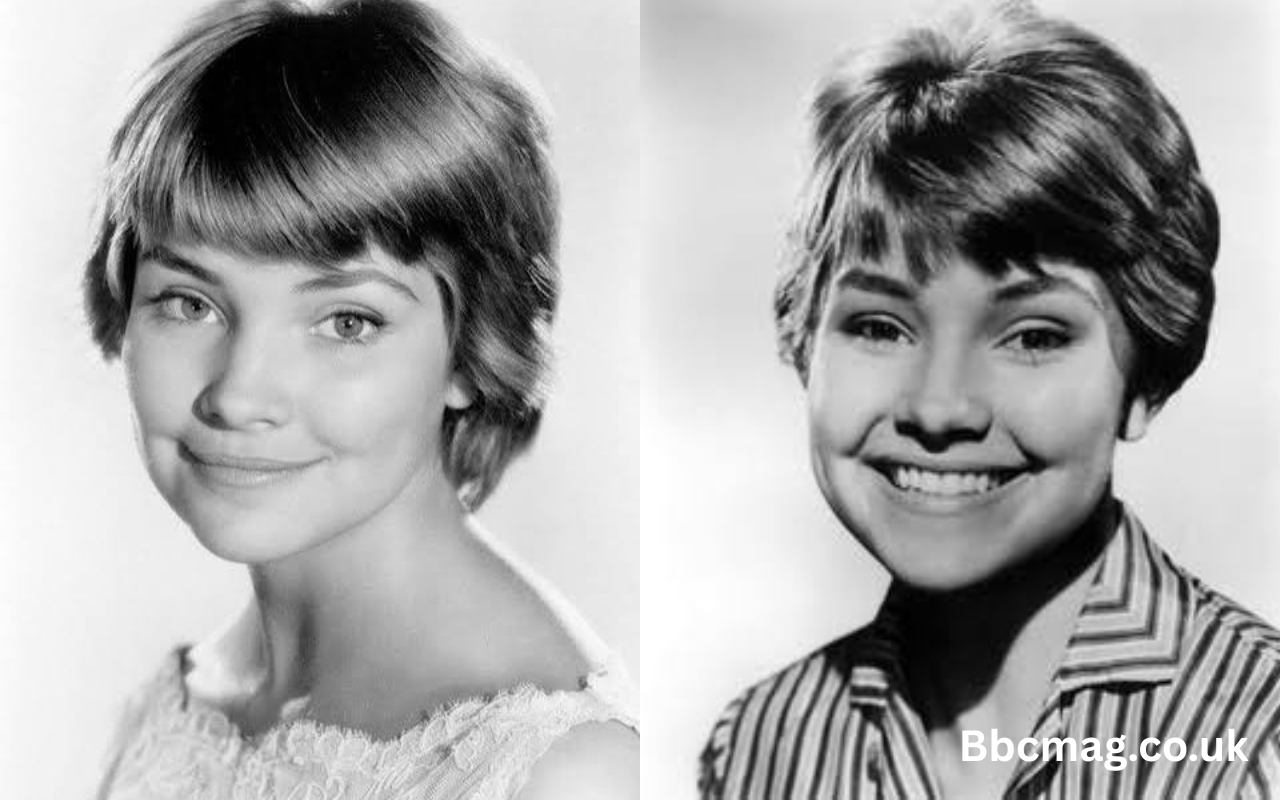
Long before The Sound of Music became one of the world’s most beloved musicals and its 1965 film adaptation introduced millions to the Von Trapp family, a young actress named Lauri Peters brought the role of Liesl von Trapp to life on the Broadway stage. With her graceful dancing, expressive acting, and beautiful singing voice, Peters became one of the brightest young talents of American musical theatre during the late 1950s and 1960s. Although her career included film, television, and acting instruction, her portrayal of the eldest Von Trapp daughter remains one of the defining moments of Broadway history.
Table of Contents
ToggleUnlike many performers who chase constant publicity, Lauri Peters built a career based on artistic excellence rather than celebrity status. She successfully transitioned from a promising young Broadway performer into an accomplished actress, respected acting teacher, and mentor for future generations. Her work alongside legendary acting coach Sanford Meisner further cemented her influence beyond the stage, proving that her contribution to theatre extended well beyond her performances.
Today, Lauri Peters is remembered not only as an actress but also as an educator who helped preserve one of America’s most influential acting techniques. Her journey reflects dedication, discipline, and a lifelong passion for performing arts that continues to inspire theatre lovers around the world.
Early Life and Family Background
Lauri Peters was born Patricia Peterson on July 2, 1943, in Detroit, Michigan, USA. She grew up in a supportive family headed by Mr. and Mrs. Harold Peterson and shared her childhood with three older brothers—Harold Jr., Victor, and Sidney. When she was still very young, the family relocated to Cleveland, Ohio, where she spent much of her childhood. Growing up in a close-knit household gave Peters the confidence to pursue creative interests from an early age, something that would eventually shape her future in the performing arts.
Unlike many young performers who discovered acting by chance, Peters was drawn first to dance. She began taking dance lessons as a child and quickly demonstrated exceptional discipline and natural ability. Ballet became her primary passion, and her commitment to mastering the art form required countless hours of practice and dedication. As her skills improved, it became clear that she possessed not only technical talent but also the stage presence needed to captivate audiences. Those early years of rigorous training built the strong foundation that later allowed her to succeed in musical theatre, where singing, dancing, and acting all play equally important roles.
Determined to pursue a professional career, Peters moved to New York City as a teenager to study ballet and seek opportunities on Broadway. At the beginning of her career, she performed under the name Patti Peterson, but because another performer had already registered that name with Actors’ Equity, she adopted the stage name Lauri Peters. That simple name change marked the beginning of a remarkable journey that would soon place her among Broadway’s brightest young stars.
Broadway Debut and Rise to Fame
Breaking into Broadway is one of the greatest challenges for any aspiring performer, yet Lauri Peters achieved it while still in her teens. Her first Broadway appearance came in 1958, when she joined the musical Say, Darling as a replacement performer in the children’s ensemble. Although the role was relatively small, it gave her valuable professional experience and introduced her to the demanding world of live theatre. Every rehearsal, performance, and backstage interaction became an important learning opportunity that prepared her for bigger roles.
Only months later, Peters earned a more significant role in the Broadway musical First Impressions, based on Jane Austen’s Pride and Prejudice. Playing Kitty Bennet, she demonstrated that she was more than a talented dancer—she possessed the acting ability and vocal talent required for major musical productions. Critics and theatre professionals began noticing the young performer whose versatility allowed her to move naturally between comedy, drama, singing, and dance.
Her true breakthrough arrived later in 1959 when she originated the role of Liesl von Trapp in the original Broadway production of The Sound of Music, starring the legendary Mary Martin. Peters became the very first actress to perform iconic songs such as “Sixteen Going on Seventeen” on stage. The production became one of Broadway’s greatest successes, running for more than 1,400 performances and winning the Tony Award for Best Musical. Her heartfelt performance helped establish the show’s emotional appeal and introduced audiences to one of musical theatre’s most memorable characters.
Creating the Original Liesl von Trapp
While many people know the role of Liesl through the 1965 film adaptation starring Charmian Carr, theatre historians recognize Lauri Peters as the actress who created the character on Broadway. That distinction carries enormous significance because originating a role means helping define the character’s personality, movement, emotional expression, and stage presence for future performers. Peters’ interpretation became the standard upon which later productions were built.
Her chemistry with fellow cast members, especially during the beloved duet “Sixteen Going on Seventeen,” helped make the production unforgettable. Interestingly, actor Jon Voight later joined the Broadway cast as Rolf, replacing the original performer. During their time together in the production, Peters and Voight developed a relationship that eventually led to marriage, making Broadway not only the place where her career flourished but also where an important chapter of her personal life began.
Peters’ work in The Sound of Music earned widespread recognition. She received a Tony Award nomination for Best Featured Actress in a Musical, shared with the child members of the cast, and also received a prestigious Theatre World Award recognizing outstanding Broadway debuts. These honors confirmed that she had become one of the most promising young actresses of her generation and established her reputation throughout the American theatre community.
Film Career and Television Appearances
Following her remarkable success on Broadway, Lauri Peters expanded her career into film and television during the early 1960s. While many stage actors struggled to adapt to the screen, Peters transitioned naturally, bringing the same warmth and expressive performance style that had made her a favorite with theatre audiences. Although she never became a full-time Hollywood celebrity, her carefully selected roles allowed her to work alongside several respected actors and directors, proving that her talent extended well beyond the Broadway stage.
One of her first major film appearances came in 1962 with Mr. Hobbs Takes a Vacation, starring Hollywood legends James Stewart and Maureen O’Hara. Peters portrayed Katey Hobbs, becoming part of a family comedy that remains a classic of its era. Appearing alongside such accomplished performers offered valuable experience and further established her credibility as an actress capable of succeeding in both theatre and cinema. Her natural screen presence and polished acting reflected the discipline she had developed through years of stage performance.
The following year, Peters gained international recognition through the British musical film Summer Holiday (1963), starring popular singer Cliff Richard. She played Barbara, one of the film’s principal female characters. Although her singing in the movie was dubbed for certain musical numbers, her acting and charm helped make the film a commercial success, introducing her to audiences outside the United States and expanding her reputation internationally.
Television Success and Memorable Roles
Television quickly became another important part of Lauri Peters’ professional career. Throughout the 1960s and early 1970s, she appeared in a variety of television dramas and anthology series, demonstrating her versatility across different genres. Rather than limiting herself to musicals, Peters accepted dramatic, western, mystery, and suspense roles that showcased her range as a performer. Her television work helped her reach viewers who may never have had the opportunity to see her perform live on Broadway.
Among her most memorable television appearances were two episodes of the long-running western Gunsmoke. In the popular 1964 episode “Mayblossom,” Peters played Mayblossom Haggen, Festus Haggen’s cheerful cousin, delivering a performance that many fans of the series still remember fondly. Later that same year, she returned to the show in another role, demonstrating her adaptability as an actress. She also appeared in series including The Nurses, The Road West, Ghost Story, Search, and The Delphi Bureau, continuing to build a respectable television résumé throughout her active acting years.
Although Peters never pursued the intense publicity associated with Hollywood stardom, critics consistently praised her sincerity and professionalism. Directors appreciated her strong theatrical training, while audiences admired the authenticity she brought to every character. Whether performing in a family comedy, western drama, or suspense series, she maintained the same commitment to believable storytelling that had defined her Broadway career.
Marriage to Jon Voight and Personal Life
Lauri Peters’ personal life attracted public attention when she married actor Jon Voight on April 30, 1962. The two first met while performing together during the Broadway production of The Sound of Music, where Voight later joined the cast as Rolf. Their shared passion for acting created a strong connection, and they also appeared together in stage productions such as Romeo and Juliet and The Two Gentlemen of Verona, further strengthening both their personal and professional relationship.
Despite their promising partnership, the marriage eventually came to an end. Peters and Voight divorced in 1967, several years before Voight achieved worldwide fame through films such as Midnight Cowboy and Coming Home. Although their marriage was relatively brief, Peters has largely maintained a private life, avoiding media attention and focusing instead on her work, education, and teaching.
Unlike many entertainers whose private lives often overshadow their careers, Peters consistently allowed her professional accomplishments to define her public image. Friends and colleagues have described her as thoughtful, disciplined, and deeply committed to the craft of acting. Her preference for privacy reflects the values she developed early in life, placing artistic growth above celebrity culture and public recognition.
Working with Sanford Meisner and Becoming an Acting Teacher
One of the most significant chapters of Lauri Peters’ life began after her years as a performer. Rather than stepping away from the theatre, she chose to invest her knowledge in educating future generations of actors. Peters became closely associated with legendary acting teacher Sanford Meisner, whose influential acting technique has shaped thousands of performers around the world. Her transition from actress to educator demonstrated her desire to preserve the highest standards of dramatic training.
In 1993, Peters and Sanford Meisner co-founded the Meisner Extension at New York University’s Tisch School of the Arts. Serving as the program’s Artistic Director and Master Teacher, she spent several years training undergraduate acting students while helping refine one of America’s most respected acting curricula. Her work emphasized truthful emotional responses, careful listening, and authentic human behavior—core principles of the Meisner Technique that continue to influence actors today.
Even after leaving NYU, Peters continued teaching the Meisner approach independently and remained dedicated to sharing Sanford Meisner’s philosophy with aspiring performers. She has also worked on educational material about his methods, helping preserve his legacy for future actors and acting teachers. Through her instruction, Peters extended her influence far beyond the stage, shaping countless careers without necessarily appearing in front of the audience herself.
Awards, Recognition, and Lasting Contributions to Theatre
Although Lauri Peters did not pursue a decades-long Hollywood career, the quality of her work earned her recognition from some of the most respected institutions in American theatre. Her most significant honor came with her performance as Liesl von Trapp in the original Broadway production of The Sound of Music. For that role, she received a 1960 Tony Award nomination for Best Featured Actress in a Musical, a remarkable achievement for such a young performer at the beginning of her professional career. She also received the prestigious Theatre World Award, presented annually to outstanding Broadway debut performers. These honors established her as one of Broadway’s rising stars during the golden age of American musical theatre.
Beyond awards, Peters’ greatest contribution lies in creating a character that has remained beloved for generations. Every actress who has portrayed Liesl von Trapp on stage has followed a path first established by Peters in 1959. Her performance helped define the character’s youthful optimism, emotional depth, and memorable musical moments. Because she originated the role, her artistic choices became part of Broadway history and influenced countless productions staged around the world.
Her influence extends even further through education. As a teacher of the Meisner Technique, Peters has guided aspiring actors toward truthful, emotionally authentic performances. While audiences may remember her for a handful of iconic roles, students and theatre professionals recognize her as someone who has helped preserve one of the most respected acting methods in modern theatre. This combination of performance and education makes her legacy both unique and enduring.
Net Worth and Sources of Income
Lauri Peters has never been known for discussing her personal finances publicly, and there are no verified official figures confirming her current net worth. Various entertainment websites have published estimates over the years, but these figures are speculative and should be viewed cautiously because they are not supported by financial disclosures or official records.
Throughout her career, Peters earned income from several professional activities. Her Broadway performances, film appearances, television roles, touring theatre productions, and soundtrack recordings all contributed to her earnings during her years as a working actress. Later, her career shifted toward acting education, where she served as an artistic director, master teacher, and instructor of the Meisner Technique. Teaching workshops, mentoring actors, and developing educational materials became important sources of professional income as her performing career gradually slowed.
Rather than pursuing commercial endorsements or celebrity branding, Peters chose a career centered on artistic excellence and education. This decision reflects her priorities throughout life. While she may not have accumulated the enormous wealth associated with major Hollywood stars, she built a respected and meaningful career that has left a lasting impact on American theatre and acting education. Her professional success is measured more by influence than by financial headlines.
Social Media Presence and Public Life
Unlike many modern entertainers, Lauri Peters maintains an extremely private public profile. She does not have verified public accounts on major social media platforms such as Instagram, X (formerly Twitter), Facebook, or LinkedIn. This absence reflects both the era in which she built her career and her long-standing preference for privacy over constant public visibility.
Instead of engaging with fans through daily online updates, Peters has remained connected to the theatre community through teaching, workshops, and professional collaborations. Many admirers continue to discover her work through recordings of The Sound of Music, classic films like Summer Holiday, and reruns of television appearances such as Gunsmoke. Theatre historians and Broadway enthusiasts also continue to celebrate her contributions through interviews, archival materials, and stage history publications.
Her limited public profile has only increased respect for her among many theatre lovers. Rather than chasing internet fame, Peters has allowed her performances, teaching, and artistic legacy to speak for themselves. In an age dominated by social media, her career serves as a reminder that lasting influence can be achieved through dedication to one’s craft rather than constant online attention.
Recent Life and Enduring Legacy
In recent years, Lauri Peters has largely remained away from the spotlight, continuing the private lifestyle she has preferred for decades. There have been no major announcements regarding new acting projects, but her influence continues through the many actors she has trained and through the ongoing appreciation of classic Broadway productions. Her work with Sanford Meisner’s acting philosophy remains one of the most important chapters of her later career, ensuring that her impact extends well beyond her own performances.
The enduring popularity of The Sound of Music has also kept Peters’ name alive in theatre history. Each revival of the musical reminds audiences that she was the original Broadway Liesl von Trapp, helping launch one of the most beloved musicals ever written. Her performances in films such as Mr. Hobbs Takes a Vacation and Summer Holiday likewise continue to introduce her talent to new generations of viewers interested in classic cinema and musical entertainment.
Lauri Peters’ story is one of quiet excellence. She achieved Broadway success at a young age, worked alongside some of the greatest performers of her generation, transitioned into respected acting education, and left behind a legacy that continues to influence both performers and audiences. Her journey demonstrates that true artistic achievement is built through talent, discipline, and a lifelong commitment to the performing arts rather than the pursuit of celebrity.
Interesting Facts About Lauri Peters
Lauri Peters’ career contains several fascinating milestones that are sometimes overlooked because of the enormous popularity of The Sound of Music. She was the very first actress to portray Liesl von Trapp on Broadway, years before the famous film adaptation introduced the character to worldwide audiences. As the original performer, Peters helped establish the personality, movement, and emotional depth that later actresses would bring to the role. Her rendition of “Sixteen Going on Seventeen” became part of Broadway history and remains closely associated with the original stage production.
Another interesting chapter of her life is her connection with acclaimed actor Jon Voight. The pair met while working on The Sound of Music after Voight joined the Broadway cast as Rolf, the young messenger who shares one of the musical’s most memorable songs with Liesl. Their professional relationship developed into a personal one, leading to their marriage in 1962. Although the marriage ended in divorce five years later, it remains an intriguing part of Broadway history because both performers later built respected careers in the entertainment industry.
Beyond acting, Peters devoted much of her later career to teaching. Her collaboration with legendary acting coach Sanford Meisner helped preserve one of the world’s most influential acting techniques. Many students who trained under her have praised her patient teaching style, deep understanding of performance, and commitment to truthful acting. Rather than remaining known only for past performances, she successfully built a second career as an educator whose influence continues through the actors she has trained.
Quick Highlights
- Created the original Broadway role of Liesl von Trapp in The Sound of Music.
- Earned a Tony Award nomination and Theatre World Award recognition early in her career.
- Starred opposite Cliff Richard in the popular musical film Summer Holiday.
- Appeared with James Stewart in Mr. Hobbs Takes a Vacation.
- Co-founded the Meisner Extension at New York University (NYU) with Sanford Meisner.
- Worked extensively as an acting teacher after her performing career.
Why Lauri Peters Remains Important Today
Even decades after her most famous performances, Lauri Peters continues to occupy a respected place in American theatre history. Broadway enthusiasts recognize her as one of the talented young performers who helped define the golden era of musical theatre during the late 1950s and early 1960s. Because The Sound of Music remains one of the most frequently performed musicals in the world, Peters’ original interpretation of Liesl continues to hold historical importance for theatre scholars, directors, and performers alike.
Her influence extends beyond audiences who watched her perform. Through her years of teaching the Meisner Technique, Peters helped shape countless aspiring actors by emphasizing honesty, emotional truth, careful listening, and genuine human connection. These principles continue to guide performers working in theatre, film, and television today. Her role as an educator demonstrates that an artist’s greatest legacy often comes not only from personal achievements but also from helping future generations succeed.
Although she has largely stayed away from public attention in recent years, Peters remains admired by theatre historians and fans who appreciate classic Broadway. Her story is a reminder that lasting artistic success is built through dedication, professionalism, and a genuine love for the craft. While many careers are measured by fame alone, Lauri Peters’ legacy is measured by the lasting impact she has made on musical theatre and acting education.
Conclusion
Lauri Peters’ journey from a young ballet student in Cleveland to one of Broadway’s most memorable performers is a story of talent, determination, and lifelong dedication to the performing arts. By originating the role of Liesl von Trapp in The Sound of Music, she secured a permanent place in Broadway history. Her successful work in theatre, film, and television demonstrated remarkable versatility, while her later commitment to teaching allowed her to shape the careers of future actors through the respected Meisner Technique.
Throughout her career, Peters consistently valued artistic integrity over celebrity status. Whether performing on Broadway, appearing in classic films such as Summer Holiday, or mentoring aspiring performers, she approached every role with professionalism and passion. Her accomplishments prove that meaningful success comes from mastering one’s craft and sharing that knowledge with others rather than simply seeking public recognition.
As Lauri Peters continues to be celebrated by theatre lovers and acting professionals alike, her story stands as a powerful reminder that resilience, discipline, and passion can create a legacy that endures for generations. Her contributions to Broadway, musical theatre, and acting education ensure that her influence will continue inspiring performers and audiences around the world for many years to come.
