
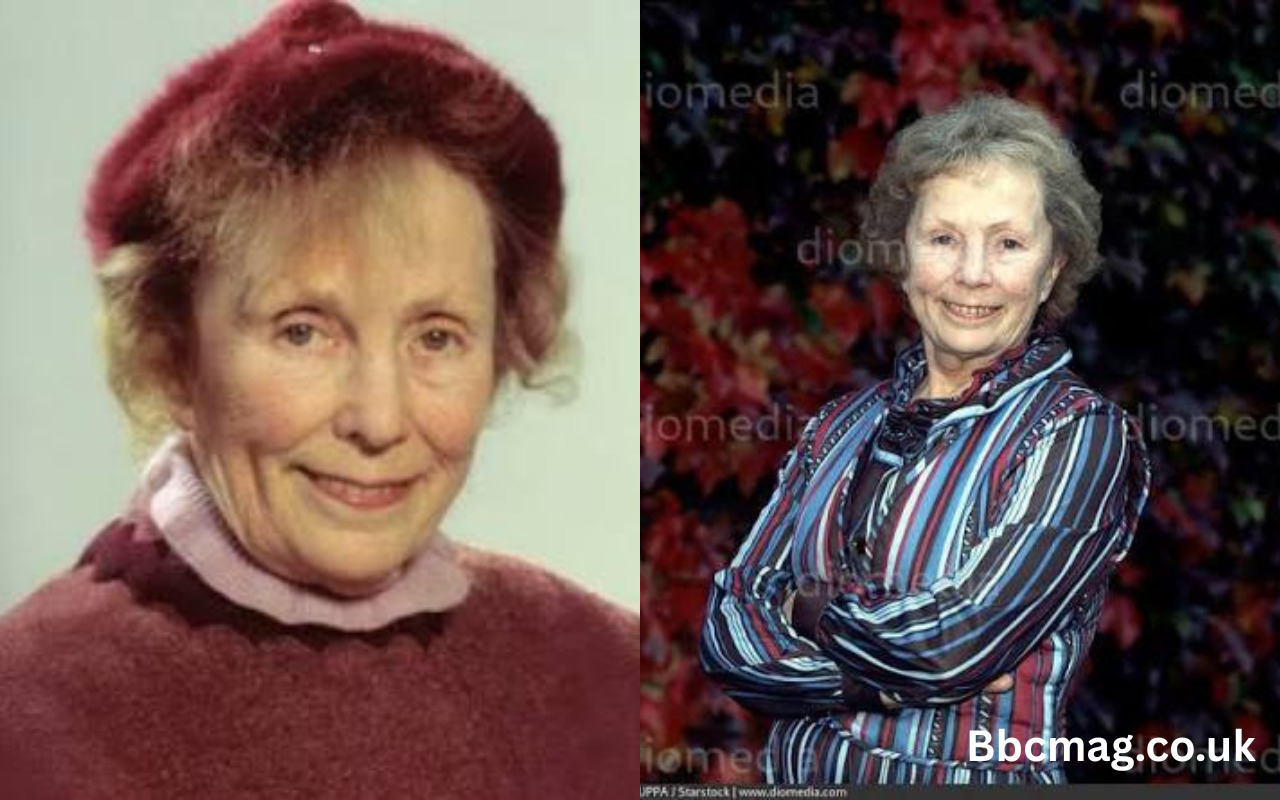
Gretchen Franklin was one of Britain’s most respected actresses, remembered for her extraordinary dedication to stage and television across a career that lasted more than seven decades. Although millions of viewers recognize her as the lovable Ethel Skinner from the BBC soap EastEnders, Franklin’s contribution to British entertainment began long before television became a household favorite. From dazzling audiences as a talented dancer in London’s theatres to becoming one of the country’s most recognizable character actresses, her journey reflects perseverance, professionalism, and an enduring love for performing arts. Even years after her passing, her work continues to inspire actors and entertain audiences through classic television reruns and theatrical history.
Table of Contents
Toggle| Quick Facts | Details |
|---|---|
| Full Name | Gretchen Gordon Franklin |
| Known As | Gretchen Franklin |
| Date of Birth | 7 July 1911 |
| Age | Passed away at 94 years old |
| Birthplace | Covent Garden, London, England |
| Date of Death | 11 July 2005 |
| Nationality | British |
| Profession | Actress, Dancer |
| Years Active | 1929–2000 |
| Famous For | Playing Ethel Skinner in EastEnders |
| Parents | Gordon Franklin and Violet Franklin |
| Siblings | None (Only Child) |
| Cousin | Clive Dunn |
| Husband | John Caswell Garth (m. 1934–1953) |
| Children | None |
| Estimated Net Worth | Not publicly disclosed |
| None | |
| Twitter/X | None |
| None | |
| None |
Early Life and Family Background
Gretchen Gordon Franklin was born on 7 July 1911 in Covent Garden, London, into a family deeply connected with theatre and entertainment. Her father, Gordon Franklin, was part of a successful song-and-dance act, while her grandfather had earned recognition as a popular music hall entertainer. Growing up in such an artistic environment naturally introduced Gretchen to performance from an early age. Instead of viewing entertainment as a distant dream, she experienced it as an everyday part of family life.
Being an only child allowed Franklin to receive plenty of encouragement from her parents. Her family understood the discipline required for a career in performing arts and supported her ambitions from the beginning. Rather than pushing her toward conventional employment, they embraced her passion for theatre, dancing, and stage productions.
Another interesting family connection was her cousin, comedian and actor Clive Dunn, who would later become famous in British television. Although both built separate careers, their success demonstrated the family’s remarkable contribution to British entertainment. Franklin’s upbringing gave her confidence, creativity, and a strong work ethic that remained visible throughout her life.
Education and the First Steps Toward Stardom
Unlike many modern actors who attend prestigious drama schools, Gretchen Franklin’s education came primarily through practical experience in the entertainment industry. After completing her early schooling in London, she entered show business while still a teenager, making her stage debut as a chorus girl in a pantomime in Bournemouth. Determined to improve her skills, she enrolled at the Theatre Girls Club in Soho in 1929, where she studied dance and performance techniques. Those lessons laid the foundation for a remarkable career that would span more than seventy years.
Franklin quickly established herself as an accomplished tap dancer. She became a founding member of the dance quartet known as the Four Brilliant Blondes and later earned recognition as one of the famous Tiller Girls at the London Palladium, a troupe celebrated for its precision dancing and spectacular stage performances. During this period she toured extensively with entertainers such as Syd and Max Harrison and appeared in productions featuring legendary British singer and actress Gracie Fields. These experiences helped her develop impeccable timing, confidence, and the ability to connect naturally with audiences.
As the years passed, Franklin realized that her talents extended beyond dancing. She gradually shifted toward dramatic acting, accepting character roles that allowed her to display warmth, humor, and emotional depth. This transition proved to be one of the defining decisions of her career, opening the door to theatre productions, films, and television dramas that would eventually make her one of Britain’s most beloved character actresses.
Theatre Career and Transition to Film and Television
During the Second World War, Gretchen Franklin enjoyed one of the biggest breakthroughs of her early acting career when she joined the successful West End revue Sweet and Low, starring alongside the celebrated performer Hermione Gingold. Their professional relationship soon developed into a lasting friendship, and the pair reunited in later productions, including Slings and Arrows. Performing in London’s prestigious theatres gave Franklin valuable exposure and established her reputation as a dependable and versatile actress.
Following her success on stage, Franklin steadily expanded into film and television. She appeared in numerous British films, including Before I Wake, Flame in the Streets, Help!, Twisted Nerve, The Three Musketeers, and The Night Visitor. While she rarely played leading roles, directors consistently cast her in memorable supporting performances because of her expressive acting style and ability to bring authenticity to every character.
Television soon became another important part of her career. Throughout the 1950s, 1960s, and 1970s she appeared in many popular British television dramas and sitcoms, including Dixon of Dock Green, Z-Cars, Softly Softly, The Sweeney, Some Mothers Do ‘Ave ‘Em, Rising Damp, Terry and June, and Crossroads. By the early 1980s, she had become a familiar face across British television, respected by audiences and fellow performers alike for her consistency and professionalism.
The Career-Defining Role in EastEnders
Although Gretchen Franklin had already enjoyed decades of success, her greatest fame arrived in 1985 when she joined the original cast of the BBC soap opera EastEnders as Ethel Skinner. At the age of 73, when many performers are considering retirement, Franklin experienced an extraordinary career revival. Ethel quickly became one of Albert Square’s most beloved residents, known for her kindness, gentle humor, unforgettable hats, and her beloved pug dog, Willy.
Franklin portrayed Ethel as a warm-hearted woman whose compassion balanced the show’s more dramatic storylines. Her friendship with Dot Cotton, played by June Brown, became one of the most iconic relationships in British soap history. Their conversations mixed humor with genuine emotion, creating moments that audiences still remember decades later. Franklin’s natural acting style made Ethel feel like a real person rather than simply a television character, helping viewers form a lasting emotional connection.
Although Franklin left the programme as a regular cast member in the late 1980s, she returned for guest appearances over the following years. Her final appearance in 2000 featured one of the most talked-about storylines in British television history, as Ethel, suffering from terminal cancer, chose to end her life with the help of her lifelong friend Dot. The emotional episode sparked national discussion and attracted millions of viewers, becoming one of EastEnders’ most memorable moments.
Major Achievements, Awards, and Lasting Contributions
Gretchen Franklin’s career is remarkable not because it was filled with glamorous leading roles, but because of its extraordinary longevity and consistency. From her stage debut in the late 1920s until her retirement in 2000, she spent more than seventy years entertaining audiences. Few British performers have enjoyed such a lengthy and successful career across theatre, film, and television. She became a trusted character actress whose performances were admired for their authenticity, warmth, and emotional depth rather than dramatic showmanship.
Although Franklin never received major competitive acting awards, her greatest achievement was earning the affection and respect of both audiences and fellow actors. Her portrayal of Ethel Skinner became one of the defining characters in EastEnders history. The emotional storyline surrounding Ethel’s final episode is still regarded as one of the most memorable moments ever broadcast by the BBC soap. Following her death in 2005, her contribution to British television was formally recognized during the 2006 BAFTA Television Awards memorial tribute, highlighting the enormous impact she had made on the entertainment industry.
Some of Gretchen Franklin’s greatest career achievements include:
- More than 70 years in professional entertainment.
- Original cast member of BBC’s EastEnders.
- Appeared in over 130 film and television productions.
- Successful careers in dance, theatre, cinema, and television.
- Honoured by the television industry following her passing for her lifelong contribution to British entertainment.
Personal Life, Marriage, and Interests
Away from the cameras, Gretchen Franklin lived a remarkably private and modest life. In 1934, she married writer and actor John Caswell Garth, who also worked as the business manager of the Wilson Barrett acting company. Their marriage lasted until Garth’s death from cancer in 1953. Franklin never remarried after losing her husband, choosing instead to devote herself to her acting career, close friendships, and charitable causes. The couple had no children, yet Franklin often spoke warmly about the many friendships she developed throughout the entertainment industry.
Friends and colleagues frequently described Franklin as kind, humorous, and exceptionally generous. Despite becoming one of Britain’s best-known television personalities during the EastEnders years, she remained humble and approachable. She preferred a quiet lifestyle over celebrity glamour and was known for maintaining a strong sense of professionalism throughout her career. Her reputation for punctuality, preparation, and respect toward colleagues earned admiration from directors and actors alike.
One of the most touching aspects of Franklin’s personal life was her love for animals and older people. Rather than spending her television earnings on luxury, she donated the royalties she received from EastEnders repeat broadcasts to charities supporting animal welfare and elderly people. She once remarked that, at her age, she had little interest in expensive possessions and preferred using her success to help others. This generosity became one of the defining features of her legacy beyond acting.
Net Worth and Income Sources
Unlike many modern celebrities, Gretchen Franklin’s financial details were never publicly disclosed. As a result, there is no verified estimate of her net worth, and any figures published online should be treated as speculation rather than established fact.
Throughout her career, Franklin earned income from several professional activities:
- Theatre performances in London’s West End.
- Film appearances throughout the 1950s, 1960s, and 1970s.
- Television acting, particularly EastEnders.
- Royalties from repeat broadcasts of her television work.
What made Franklin unusual was her attitude toward money. Instead of focusing on accumulating wealth, she openly shared that much of her royalty income from EastEnders repeats was donated to charitable organizations. This generosity demonstrated that she valued compassion and service far more than financial success, making her admired not only as an actress but also as a humanitarian.
Social Media Presence and Public Image
Because Gretchen Franklin belonged to a generation that completed its career before the rise of social media, she never maintained official accounts on Instagram, X (formerly Twitter), Facebook, LinkedIn, or similar platforms. Her interaction with audiences came through television interviews, theatre appearances, fan letters, and public events rather than online communication.
Even without social media, Franklin built a remarkably loyal fan following. Millions of viewers welcomed her into their homes every week through EastEnders, where Ethel Skinner became a familiar and comforting presence. Long after her retirement, fans continued to celebrate memorable scenes, especially her friendship with Dot Cotton and the emotional conclusion of her character’s story.
Today, appreciation for Gretchen Franklin lives on through television archives, streaming services, documentaries, and fan communities dedicated to classic British drama. Her performances continue to introduce new generations to one of the finest character actresses British television has ever produced.
Final Years, Death, and Enduring Legacy
After stepping away from regular acting, Gretchen Franklin enjoyed a quieter life in Barnes, southwest London. Although she no longer appeared frequently on television, she remained deeply appreciated by fans and former colleagues. In 2005, she had hoped to present the Lifetime Soap Achievement Award to her longtime EastEnders co-star June Brown at the British Soap Awards, but poor health prevented her from attending. It was a disappointing moment for Franklin, who had maintained a close friendship with Brown long after they stopped working together.
Gretchen Franklin passed away peacefully at her home on 11 July 2005, just four days after celebrating her 94th birthday. News of her death prompted heartfelt tributes from across the British entertainment industry. Fellow actors remembered her as cheerful, generous, and endlessly professional, while millions of viewers reflected on the joy she had brought to television through her unforgettable portrayal of Ethel Skinner. Her life and career were later honored during the 2006 BAFTA Television Awards memorial tribute, recognizing her remarkable contribution to British television and theatre.
Even after her passing, Franklin continued to make a positive difference. Probate records later revealed that she left a significant portion of her estate to Help the Aged (now part of Age UK), while other portions were shared among friends and relatives. Throughout her lifetime she had also donated the royalties from EastEnders repeat broadcasts to animal charities, reflecting the generosity that defined her character both on and off screen. Her charitable legacy remains as inspiring as her acting career.
Gretchen Franklin’s Influence on British Television
Gretchen Franklin’s influence extends far beyond a single television role. She represented an era when performers developed their craft through years of experience in music halls, theatres, touring productions, films, and television. Her versatility allowed her to adapt to dramatic changes in the entertainment industry, from live stage performances to the golden age of British television. Few actors successfully reinvent themselves as she did, becoming a household name in her seventies after decades of steady work.
Her portrayal of Ethel Skinner helped redefine what supporting characters could contribute to a long-running television drama. Rather than existing in the background, Ethel brought humor, compassion, vulnerability, and emotional depth to EastEnders. Her friendship with Dot Cotton remains one of the most celebrated relationships in British soap history, proving that audiences connect just as strongly with kindness and authenticity as they do with dramatic conflict. Television critics continue to cite Ethel’s final storyline as one of the most powerful episodes ever produced by the series.
Modern British actors frequently benefit from opportunities created by pioneers like Franklin. Her commitment to professionalism, humility, and character-driven storytelling established standards that continue to influence performers today. Whether remembered for her stage work, classic films, or EastEnders, Gretchen Franklin occupies a respected place in the history of British entertainment.
Lesser-Known Facts About Gretchen Franklin
Beyond her famous television career, Gretchen Franklin’s life included many fascinating details that are often overlooked. These facts provide a fuller picture of the remarkable woman behind one of Britain’s best-loved television characters.
Some interesting facts include:
- She began her professional career as a teenage chorus girl, earning only £2 per week during her earliest stage performances.
- Before becoming an actress, she achieved success as a professional tap dancer and performed with the famous Tiller Girls.
- Her cousin was the well-known actor Clive Dunn, remembered for playing Corporal Jones in Dad’s Army.
- She appeared in more than 130 screen productions, including films, television dramas, and sitcoms.
- She never remarried after the death of her husband in 1953.
- She donated all royalties from overseas EastEnders repeats to animal charities.
- She left a substantial charitable gift in her will to support older people.
- She remained active in acting until nearly 90 years of age, an extraordinary achievement in British entertainment.
These details reveal that Franklin’s legacy was built not only on talent but also on compassion, resilience, generosity, and an unwavering commitment to her profession.
Conclusion
Gretchen Franklin’s life is a remarkable example of dedication, patience, and genuine love for the performing arts. From her early days dancing on British stages to becoming one of the most beloved characters in EastEnders, she demonstrated that success does not always arrive quickly. Instead, it is often the result of decades of persistence, continuous learning, and an unwavering commitment to excellence. Her ability to captivate audiences across theatre, film, and television ensured that her influence would extend far beyond her own generation.
Beyond the spotlight, Franklin was admired for her humility and generosity. She quietly supported charities, valued friendship over fame, and used her success to improve the lives of others rather than seeking personal luxury. These qualities made her not only a respected actress but also a role model whose character matched the warmth and kindness she portrayed on screen. Her life reminds us that true greatness is measured not only by professional achievements but also by the positive impact we leave on those around us.
As Gretchen Franklin’s remarkable legacy continues to inspire audiences and aspiring performers alike, her story stands as a timeless reminder that perseverance, compassion, and passion can shape a meaningful and enduring place in history. Though she is no longer with us, her unforgettable performances and generous spirit ensure that she will always be remembered as one of Britain’s finest character actresses, whose influence continues to live on through the countless lives she touched.
