
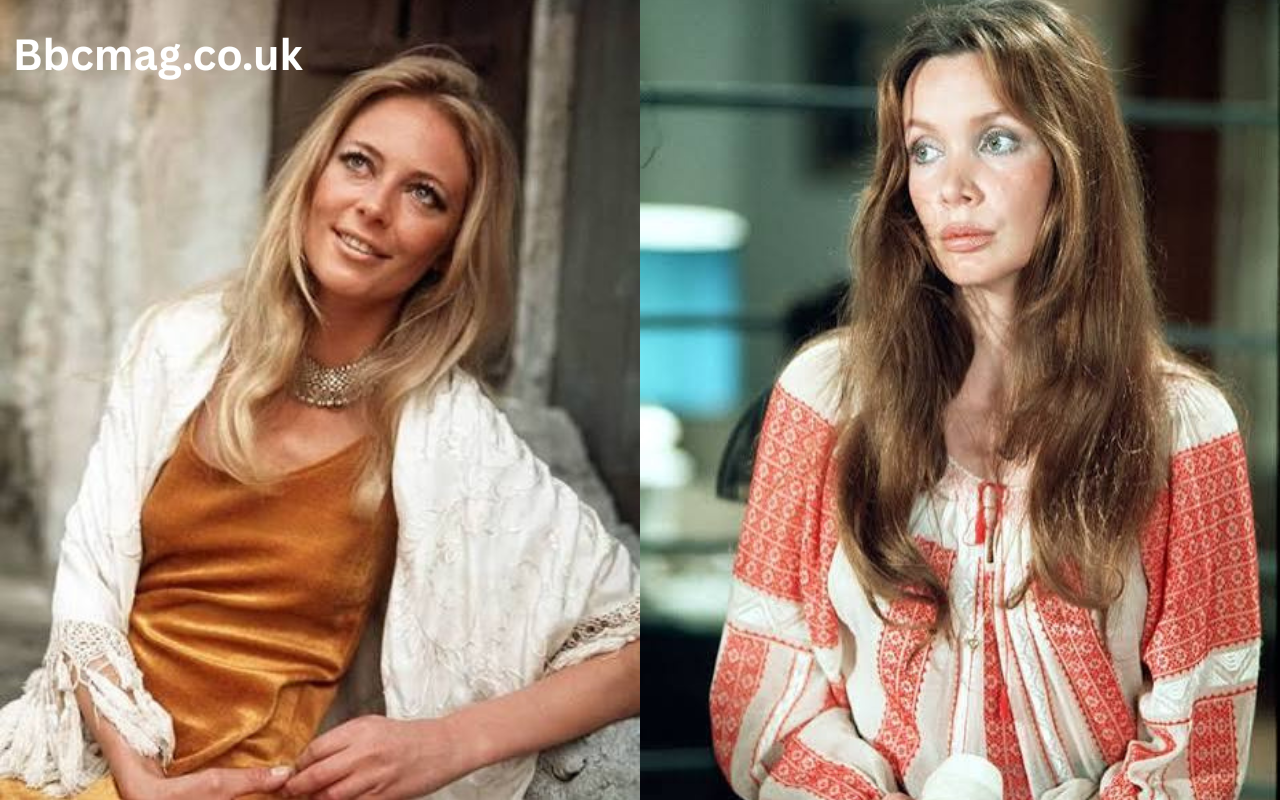
Early Life and Family Background
Anna Gaël was born as Anna Abigail Gyarmathy on September 27, 1943, in Budapest, Hungary, during one of the most turbulent periods in European history. Born in the final years of World War II, her earliest years were shaped by uncertainty and political change. Although she would later become known internationally as an actress and war correspondent, her childhood was rooted in a family that valued education, creativity, and intellectual achievement. Her father, László Izsak Gyarmathy, was a respected mathematician, while her mother was a poet. Growing up in such an environment exposed Anna to both analytical thinking and artistic expression from an early age, creating a strong foundation for her future career.
Table of Contents
ToggleAs political conditions changed in post-war Hungary, Anna’s family relocated to France while she was still a child. Moving to a new country introduced her to different cultures, languages, and traditions, helping her become fluent in French while maintaining her Hungarian roots. The experience of adapting to a new society also strengthened her resilience and independence, qualities that would later define both her acting career and her work as a journalist. Unlike many performers who spent years in formal acting schools, Anna’s artistic abilities developed naturally through her curiosity, confidence, and exposure to European culture.
France became the place where Anna truly discovered her passion for cinema. During the 1950s, Paris was one of Europe’s leading centers for art, literature, theatre, and filmmaking. Surrounded by this creative atmosphere, Anna developed an appreciation for storytelling and performance. By the age of fifteen, she had already begun appearing in films, making an impressive start to a career that would eventually span more than two decades across several European countries.
Beginning of an International Acting Career
Anna Gaël entered the film industry during a remarkable period for European cinema. The 1960s brought fresh storytelling styles, international film collaborations, and directors who were eager to work with multilingual actors capable of performing across borders. Anna’s ability to speak multiple languages and adapt to different cultures made her an attractive choice for producers working in France, Italy, Germany, Hungary, and later Britain and the United States. Rather than limiting herself to one national cinema, she embraced opportunities throughout Europe, building a diverse and respected filmography.
Using the professional stage name Anna Gaël, she quickly established herself as an elegant actress known for intelligence, sophistication, and emotional depth. She never relied solely on glamour or beauty. Instead, audiences appreciated her ability to portray characters with genuine emotion and quiet confidence. Directors valued her professionalism, while fellow actors admired her versatility across drama, romance, historical films, thrillers, and literary adaptations.
Several early productions helped establish her reputation.
- She appeared in both French and Italian productions during the early 1960s.
- Her multilingual abilities opened opportunities unavailable to many actresses of her generation.
Critics increasingly recognized her as one of the promising European actresses capable of working comfortably across international film industries.
Rise to Fame and Breakthrough Film Roles
Anna Gaël’s career gained real momentum during the 1960s, when European cinema was experiencing a creative renaissance. Directors across France, Italy, Germany, and Britain were producing ambitious films that reached international audiences, and Anna’s multilingual background made her an ideal choice for these productions. She appeared in romantic dramas, literary adaptations, suspense films, and historical stories, proving she could move effortlessly between different genres. Unlike actresses who became associated with one type of character, Anna consistently demonstrated versatility, portraying women with intelligence, elegance, and emotional complexity.
One of her earliest notable appearances came in films such as Benjamin ou les Mémoires d’un puceau (1968), Therese and Isabelle (1968), and Béru et ces dames. These productions helped establish her reputation throughout Europe. Critics appreciated her calm screen presence and natural acting style, while filmmakers recognized her professionalism and ability to perform convincingly in multiple languages. During this period, Anna became one of the recognizable faces of European cinema, appearing alongside respected actors and directors who were shaping the industry’s future.
As her career progressed, Anna began receiving offers from larger international productions. Instead of remaining confined to French cinema, she embraced opportunities in British, American, Hungarian, German, and Italian films. This international approach significantly expanded her audience and gave her a career that crossed national borders, something relatively uncommon for actresses during the late 1960s. Her willingness to explore different film industries became one of the defining characteristics of her professional journey.
Major Films and Career Highlights
One of Anna Gaël’s most recognized performances came in the 1969 war drama The Bridge at Remagen, directed by John Guillermin. The film dramatized the historic World War II battle surrounding the capture of Germany’s Ludendorff Bridge and featured an impressive international cast that included George Segal, Ben Gazzara, Robert Vaughn, and Bradford Dillman. Anna portrayed the role of the French Girl, appearing in a production that brought her to the attention of English-speaking audiences. Although her role was supporting rather than leading, participating in such a major Hollywood-backed production significantly elevated her international profile.
The same era also saw her appear in Zeta One (released in some markets as The Love Factor), a science-fiction comedy that has since developed a cult following among classic film enthusiasts. While the film received mixed reviews upon release, it remains one of the most recognizable titles in Anna’s filmography today. Her appearance in the film demonstrated her willingness to experiment with different genres rather than limiting herself to traditional dramatic roles.
Among her other memorable works were Nana (1970), based on Émile Zola’s famous novel, Mademoiselle de la Ferté, Dracula père et fils, Blue Blood, and the British crime film Sweeney 2. Throughout nearly twenty-five years in front of the camera, Anna accumulated dozens of acting credits across film and television, earning respect for her consistency, professionalism, and ability to adapt to changing trends in European entertainment.
Some of Anna Gaël’s best-known productions include:
- The Bridge at Remagen (1969)
- Therese and Isabelle (1968)
- Benjamin ou les Mémoires d’un puceau (1968)
- Zeta One (The Love Factor) (1969)
- Nana (1970)
- Dracula père et fils (1976)
- Sweeney 2 (1978)
Leaving Hollywood Behind to Become a War Correspondent
Few actresses have surprised the public quite as dramatically as Anna Gaël did when she chose to leave acting behind. After retiring from the film industry in 1981, she decided to pursue journalism instead of continuing a successful acting career. While many performers spend decades trying to remain in the spotlight, Anna intentionally walked away from fame to report on some of the world’s most dangerous conflicts. It was an extraordinary career change that reflected both courage and intellectual curiosity.
As a war correspondent and special reporter, Anna covered conflicts in Vietnam, South Africa, and Northern Ireland. Reporting from these regions required remarkable bravery, emotional resilience, and a deep commitment to truthful journalism. Rather than portraying fictional stories on film sets, she now documented real human experiences during periods of violence and political unrest. Her work demonstrated that she was motivated by far more than celebrity status—she genuinely wanted to understand and communicate the realities facing ordinary people living through conflict.
This remarkable professional transformation became one of the defining features of Anna Gaël’s legacy. She proved that success in one field does not prevent someone from pursuing an entirely different passion. Her ability to earn respect both as an actress and as a journalist remains exceptionally rare, making her life story one of reinvention, courage, and lifelong learning.
Personal Life, Marriage, and Family
Anna Gaël’s personal life became widely known after she met Alexander Thynn, then Viscount Weymouth, in Paris in 1959. At the time, Anna was building her acting career in France while Alexander was the heir to one of Britain’s oldest aristocratic families. Their relationship eventually attracted considerable media attention because both came from very different worlds—Anna was an internationally recognized actress with Hungarian roots, while Alexander belonged to British nobility. Despite the differences in their backgrounds, the two developed a lasting relationship that would shape the next chapter of Anna’s life.
Before marrying Alexander Thynn, Anna had been married to French film director Gilbert Pineau. Following the end of that marriage, she and Alexander married on May 9, 1969. Upon her marriage, she became Viscountess Weymouth, and when her husband inherited the title of 7th Marquess of Bath in 1992, Anna became the Marchioness of Bath. Although the British aristocratic title brought public attention, Anna continued to maintain her own identity as a former actress and respected journalist rather than relying solely on her royal status.
The couple had two children together: Lady Lenka Thynn, born in 1969, and Ceawlin Thynn, born in 1974, who later became the 8th Marquess of Bath. Anna devoted much of her later life to balancing family responsibilities with her writing and journalism. While media coverage occasionally focused on disagreements within the family, particularly surrounding her son’s marriage, Anna generally preferred to keep private matters away from public discussion. Friends and colleagues often described her as intelligent, independent, and deeply committed to those closest to her.
Life Beyond Acting: Writing and Journalism
Leaving the entertainment industry did not mean stepping away from storytelling. Instead, Anna Gaël redirected her talents toward journalism and writing, fields where she believed she could contribute to society in a more meaningful way. Covering wars and political conflicts required an entirely different set of skills than acting. It demanded courage, careful observation, empathy, and the ability to communicate complex human experiences with honesty. Anna embraced these challenges with remarkable determination, proving that she was far more than a successful actress.
Her assignments as a war correspondent took her to regions experiencing violence and political unrest, including Vietnam, South Africa, and Northern Ireland. Reporting from these areas placed her in situations that were often dangerous and emotionally demanding. Instead of fictional stories created for film audiences, Anna now documented real events affecting thousands of lives. Her reporting reflected a genuine desire to inform readers about the realities of conflict while giving a voice to people whose experiences were often overlooked.
Anna also wrote books and articles inspired by her experiences, combining firsthand observations with thoughtful commentary. Her transition from cinema to journalism remains one of the most remarkable career changes made by any European actress of her generation. It demonstrated that professional success does not have to be limited to one field and that lifelong curiosity can lead to entirely new opportunities. Even today, her work is remembered as an example of courage, adaptability, and intellectual ambition.
Awards, Recognition, and Lasting Legacy
Although Anna Gaël did not accumulate a large collection of mainstream acting awards, her career earned respect across several countries because of its diversity and longevity. She appeared in films produced in France, Italy, Germany, Hungary, Britain, and the United States, something that relatively few actresses of her era accomplished. Directors appreciated her professionalism, multilingual abilities, and willingness to accept challenging roles, while audiences admired her elegance and natural screen presence.
Her greatest achievement may not have been a single award but the extraordinary ability to reinvent herself. Many actors spend their entire careers trying to remain relevant in entertainment, yet Anna successfully built a second respected career as a journalist covering some of the world’s most difficult conflicts. This rare transformation continues to inspire historians, journalists, and film enthusiasts alike. She showed that personal growth often comes from embracing change rather than fearing it.
Today, Anna Gaël’s legacy lives on through her films, television appearances, journalistic work, and historical significance as the Marchioness of Bath. Classic movie fans continue discovering her performances, while biographies and archival interviews preserve the story of a woman whose life extended far beyond the entertainment industry. Her remarkable journey—from wartime Hungary to European cinema, frontline reporting, and British aristocracy—remains one of the most fascinating biographies of the twentieth century.
Net Worth, Income Sources, and Financial Success
Anna Gaël enjoyed a long and varied professional career that included acting, journalism, writing, and public life. Unlike many modern celebrities, however, she kept her financial affairs private. No verified public records or official statements have ever confirmed her personal wealth, making many figures found online speculative rather than factual. For that reason, it is more accurate to say that Anna Gaël’s net worth was never publicly disclosed.
During her years in the film industry, Anna earned income from appearing in feature films, television productions, and international co-productions across France, Britain, Italy, Germany, and the United States. As her popularity grew throughout the 1960s and 1970s, she became a familiar face in European cinema, working steadily with respected filmmakers. After leaving acting, she established a second career as a journalist and war correspondent, later adding writing to her list of professional achievements. These diverse careers provided multiple sources of income throughout her lifetime.
Although she later became the Marchioness of Bath through her marriage to Alexander Thynn, Anna maintained her own professional identity. She never presented herself primarily as a socialite or aristocrat but instead remained known for her accomplishments in entertainment and journalism. Her financial legacy is therefore best understood through the breadth of her work rather than unverified estimates of personal wealth.
Primary sources of Anna Gaël’s income included:
- Film and television acting.
- Journalism and war correspondence.
- Writing and publishing.
- Public appearances and media work.
Social Media Presence and Public Image
Anna Gaël lived most of her public life long before social media transformed celebrity culture. As a result, she never operated official accounts on platforms such as Instagram, X (formerly Twitter), Facebook, TikTok, or LinkedIn. Modern audiences usually discover her through classic films, archived interviews, historical biographies, and online film databases rather than through personal social media profiles.
Despite not participating in today’s digital world, Anna continues to attract interest from classic film enthusiasts, historians, and journalists. Many fan pages, cinema websites, and historical archives celebrate her work by sharing photographs, film clips, biographies, and interviews. Her performances in films like The Bridge at Remagen and Zeta One continue introducing new generations to her acting career, while articles about her journalism highlight the remarkable transition she made after leaving the entertainment industry.
Her public image remained remarkably consistent throughout her life. She was often described as intelligent, graceful, adventurous, and independent. Whether appearing on screen or reporting from conflict zones, Anna earned respect through professionalism rather than publicity. In an era increasingly influenced by social media visibility, her legacy reminds readers that meaningful careers can be built through talent, dedication, and integrity instead of constant online exposure.
Final Years, Death, and Enduring Legacy
In her later years, Anna Gaël largely stepped away from public attention while remaining connected to her family and preserving the legacy of her extraordinary career. Having successfully reinvented herself from actress to journalist and writer, she had already achieved what very few public figures manage during a lifetime—earning recognition in two entirely different professions. Friends and colleagues remembered her as a woman of exceptional courage, curiosity, and determination whose life was guided by a genuine desire to understand the world around her.
Anna Gaël passed away in Paris, France, on September 17, 2022, just ten days before her seventy-ninth birthday. News of her death prompted tributes from admirers of both her acting and journalistic careers. While she may not have been among Hollywood’s biggest stars, those familiar with European cinema recognized her as a gifted actress who later demonstrated remarkable bravery by reporting from war zones. Her life story remains unique because it combined artistic achievement, intellectual curiosity, and personal courage in equal measure.
Today, Anna Gaël is remembered not only for the films she appeared in but also for the example she set through her willingness to embrace change. Her journey from wartime Hungary to French cinema, international filmmaking, frontline journalism, and British aristocracy illustrates a life defined by resilience and reinvention. Film historians continue studying her performances, while readers interested in journalism admire the courage she displayed when covering some of the world’s most dangerous conflicts. Her story proves that true success is not measured by fame alone but by the lasting impact a person leaves through their work and character.
Conclusion
Anna Gaël’s life was far more than the story of a successful actress. She transformed herself repeatedly throughout her lifetime, embracing new opportunities with confidence, intelligence, and determination. From her childhood in wartime Hungary to her rise in European cinema, from becoming a respected war correspondent to joining one of Britain’s most historic aristocratic families, every chapter of her journey reflected courage and adaptability. Rather than remaining comfortable within one profession, she continuously sought new challenges that expanded both her knowledge and her contribution to society.
Her legacy extends beyond memorable film performances. Anna demonstrated that curiosity, education, and resilience can open unexpected doors throughout life. She proved that it is possible to leave behind one successful career and begin another with equal passion and commitment. Whether remembered as an actress, journalist, author, or Marchioness of Bath, she earned admiration through authenticity and perseverance rather than seeking attention or publicity.
As Anna Gaël continues to inspire film lovers, historians, and aspiring journalists, her remarkable story serves as a timeless reminder that passion, courage, and lifelong learning can shape an extraordinary legacy. Her journey encourages future generations to embrace change, pursue meaningful work, and never be afraid to redefine their purpose, no matter where life leads.
