
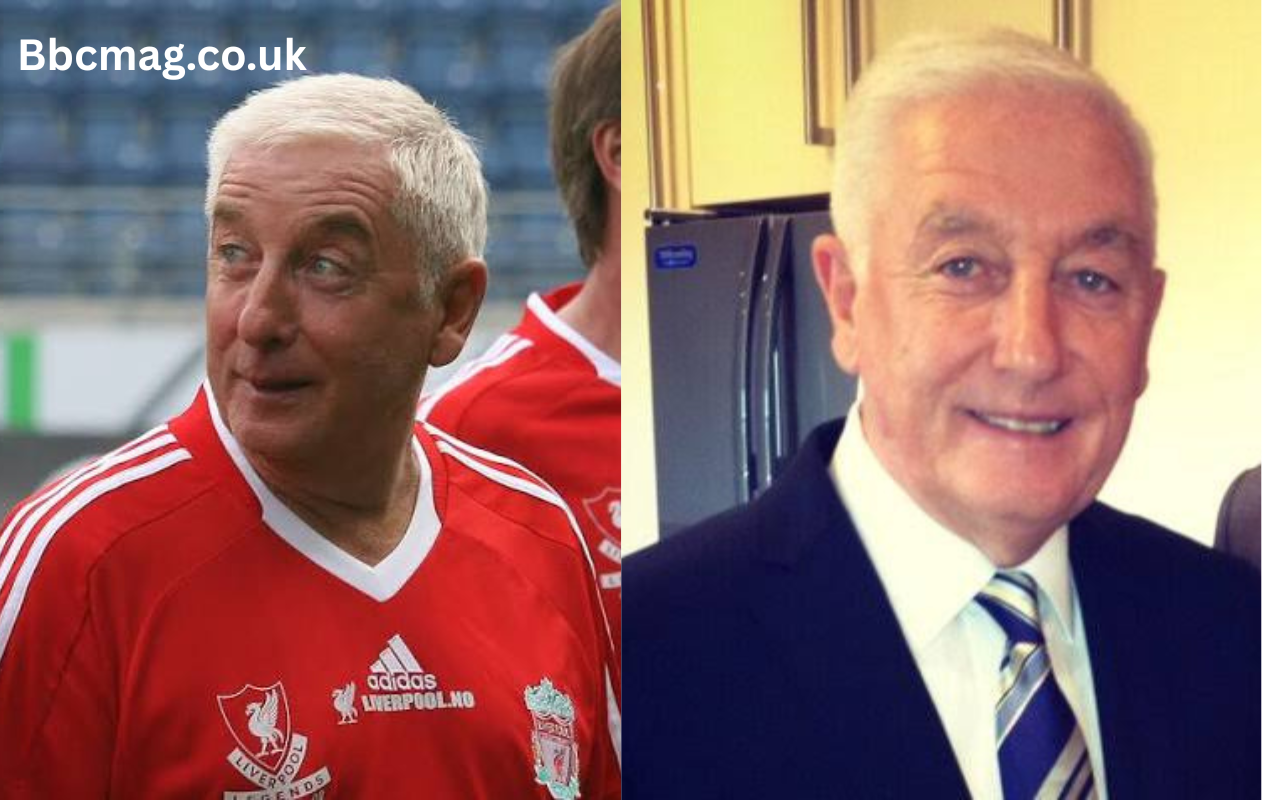
Early Life and Family Background
Roy Quentin Echlin Evans was born on October 4, 1948, in Bootle, Merseyside, England, a town located just north of Liverpool that has produced many talented footballers over the years. Growing up in a working-class family during the post-war period, Evans experienced a childhood where football was more than just a sport—it was part of everyday life. Streets, parks, and school playgrounds became his first football pitches, where he developed the skills and passion that would shape his future. Although very little public information is available about his parents and siblings, it is widely known that his family supported his football ambitions from a young age.
Table of Contents
ToggleLike thousands of youngsters across Merseyside, Evans dreamed of wearing the famous red shirt of Liverpool Football Club. His natural ability, discipline, and tactical understanding quickly made him stand out among players of his age. Unlike many young footballers who relied purely on physical strength or pace, Evans earned praise for reading the game intelligently and making smart defensive decisions. His performances at school level eventually led to selection for England Schoolboys, giving him valuable experience against some of the country’s finest young talents.
One of the defining moments of his childhood came in 1964, when legendary Liverpool manager Bill Shankly personally visited the Evans family home to discuss Roy joining Liverpool as an apprentice. For a football-loving teenager from Bootle, there could hardly have been a greater honor. That meeting marked the beginning of a remarkable relationship with Liverpool Football Club, one that would last for more than three decades and influence nearly every stage of his professional life. Evans later described himself as “the luckiest Liverpudlian ever” because of the opportunities Liverpool gave him throughout his career.
Education and Learning Through Football
Roy Evans did not follow a traditional academic path into adulthood. Instead, like many footballers of his generation, he entered professional football at a young age through Liverpool’s apprenticeship system. While classroom education remained important during his early years, the majority of his practical education came from working alongside some of the greatest football minds England has ever produced. Rather than studying management from books, Evans learned directly from people who were building one of the greatest football dynasties in European history.
Perhaps the most important classroom in Evans’ life was Liverpool’s famous Boot Room. Although physically just a small room inside Anfield, the Boot Room became legendary because it served as the meeting place where coaches such as Bill Shankly, Bob Paisley, Joe Fagan, Ronnie Moran, and later Roy Evans discussed tactics, player development, scouting, and football philosophy. The culture emphasized teamwork, humility, and constant learning rather than individual recognition. Evans absorbed these values every day, gradually developing his own coaching identity while preserving Liverpool’s traditions.
The education Evans received through football extended beyond tactical knowledge. Working under Shankly and Paisley taught him leadership, patience, communication, and the importance of developing young players. These lessons later became central to his management style. Rather than relying solely on expensive transfers, Evans believed in giving opportunities to academy graduates and helping players improve technically and mentally. Those principles remained with him throughout his coaching and managerial career, making him one of the final representatives of Liverpool’s famous Boot Room philosophy.
Playing Career at Liverpool
Roy Evans officially signed professional terms with Liverpool after joining the club as an apprentice in October 1965. However, breaking into Liverpool’s first team during one of the club’s strongest eras proved incredibly difficult. Bill Shankly had assembled a squad filled with experienced international players, meaning opportunities for young defenders were limited. Evans spent several years developing his game in the reserve team before finally making his senior debut during the closing stages of the 1969–70 season.
Although Evans possessed excellent football intelligence, his first-team appearances remained limited because Liverpool’s defense featured established stars who consistently performed at the highest level. Between 1970 and 1973, Evans made 11 senior appearances for Liverpool across league and cup competitions. In 1973, he also spent time on loan with the Philadelphia Atoms in the North American Soccer League, gaining valuable first-team experience while broadening his understanding of football outside England. Despite enjoying the opportunity in America, Liverpool always remained his true football home.
Perhaps the biggest turning point of Evans’ playing career came when Bob Paisley approached him with an unexpected proposal. Rather than continuing as a player, Paisley believed Evans possessed exceptional coaching qualities and encouraged the then 25-year-old to retire early and become Liverpool’s reserve team coach. Initially reluctant to give up playing, Evans eventually accepted the offer after discussions with teammates and mentors. Looking back, it proved to be one of the most important decisions of his life—and one that ultimately shaped Liverpool’s future for decades to come.
Coaching Career and Rise Through Liverpool’s Famous Boot Room
Roy Evans’ coaching career began in 1974, shortly after Bob Paisley persuaded him to retire from playing and take charge of Liverpool’s reserve team. It was an unusual decision because Evans was only 25 years old, but Paisley believed he possessed exceptional football intelligence and leadership qualities. The appointment quickly proved inspired. In his very first season as reserve-team coach, Evans guided Liverpool to the Central League championship, establishing himself as one of the brightest young coaches in English football. Over the next nine seasons, his reserve side won the Central League title seven times, a remarkable achievement that reflected both his tactical ability and his gift for developing young players.
Working within Liverpool’s legendary Boot Room became the greatest education of Evans’ professional life. The Boot Room was far more than a meeting space—it was the heart of Liverpool’s football philosophy, where coaches gathered to discuss tactics, player development, scouting, and match preparation. Evans worked alongside iconic football minds such as Bob Paisley, Joe Fagan, Ronnie Moran, and Kenny Dalglish, absorbing decades of football knowledge while helping Liverpool maintain its dominance in English and European football. This environment shaped Evans’ coaching philosophy, which emphasized teamwork, technical excellence, discipline, and attractive attacking football rather than individual brilliance alone.
As Evans’ reputation continued to grow, he was promoted to Liverpool’s senior coaching staff following Bob Paisley’s retirement in 1983. During the following decade, he played an important role behind the scenes as Liverpool enjoyed one of the most successful periods in its history, winning league championships, domestic cups, and the historic 1983–84 treble under Joe Fagan before later helping Kenny Dalglish’s successful teams. Although Evans rarely sought public attention, players and fellow coaches widely respected his calm personality, excellent communication skills, and remarkable ability to improve young footballers. By the early 1990s, many within Liverpool believed he was the natural successor to continue the club’s famous Boot Room tradition.
Becoming Liverpool Manager
Everything changed on 31 January 1994, when Graeme Souness resigned as Liverpool manager. After spending nearly twenty years progressing through Liverpool’s coaching system, Roy Evans was appointed as manager of his boyhood club. His appointment was welcomed enthusiastically by supporters because it represented a return to Liverpool’s traditional values. Chairman David Moores famously described Evans as “the last of the Shankly lads,” recognizing him as one of the final products of the Boot Room system created by Bill Shankly decades earlier. For Evans personally, becoming Liverpool manager fulfilled a prediction made by former chairman John Smith back in 1974, when he said that one day Evans would manage the club.
When Evans inherited the team, Liverpool was going through a difficult transition. The club had struggled to keep pace with the rapidly changing Premier League after years of dominance during the 1970s and 1980s. Rather than making dramatic changes overnight, Evans focused on restoring confidence, improving the team’s attacking style, and giving talented young players opportunities to flourish. His football philosophy centered on quick passing, intelligent movement, creative freedom, and entertaining supporters. Instead of relying on defensive tactics, Evans encouraged his teams to attack with confidence and express themselves on the pitch. That philosophy soon made Liverpool one of the most exciting teams in English football.
Under Evans’ management, several outstanding footballers either reached their peak or established themselves as future Liverpool legends. Robbie Fowler developed into one of Europe’s most feared goalscorers, while Steve McManaman became one of the Premier League’s most creative midfielders. Players such as Jamie Redknapp, Stan Collymore, Jason McAteer, Patrik Berger, and later a teenage Michael Owen also thrived under his guidance. Evans believed that technically gifted footballers should be trusted to express themselves, and many supporters still remember his Liverpool teams for their exciting, free-flowing attacking football. Although consistency sometimes proved difficult, they remained among the league’s most entertaining sides throughout the mid-1990s.
Successes, Challenges, and Defining Moments
Roy Evans enjoyed several memorable achievements during his four full seasons as Liverpool manager. His biggest success came in 1995, when Liverpool defeated Bolton Wanderers 2–1 in the League Cup Final at Wembley. Steve McManaman produced a magnificent performance, scoring both goals as Liverpool lifted their first major trophy since 1992. For Evans, it was a deeply emotional occasion because he had spent nearly thirty years serving Liverpool in different roles before finally winning silverware as first-team manager. The victory also reinforced supporters’ belief that Liverpool was moving back toward competing for major honors once again.
Another memorable campaign followed in 1995–96, when Liverpool reached the FA Cup Final against Manchester United. Evans’ side played attractive football throughout the season and came close to challenging for the Premier League title before eventually finishing behind Alex Ferguson’s Manchester United. Although Liverpool lost the FA Cup Final 1–0 thanks to Eric Cantona’s late goal, Evans later admitted that failing to win the league that season remained his biggest regret as manager. He believed that squad had enough attacking quality to become champions but lacked the consistency needed over an entire campaign. Despite the disappointment, Liverpool had firmly re-established themselves among England’s leading clubs.
However, football was changing rapidly during the late 1990s. The Premier League became increasingly tactical, financially competitive, and internationally influenced. Liverpool’s board eventually decided to appoint French coach Gérard Houllier as joint manager alongside Evans in 1998, creating one of the most unusual management structures in English football history. The arrangement lasted only a few months before Evans resigned, believing the club would benefit from having one clear leader rather than two. His departure ended more than three decades of continuous service to Liverpool—a relationship that had begun when Bill Shankly knocked on his parents’ front door to offer him an apprenticeship. Even in leaving, Evans made it clear that Liverpool’s future mattered more to him than his own position, a gesture that earned lasting respect from supporters.
Life After Liverpool and Other Football Roles
Leaving Liverpool in November 1998 was one of the most emotional moments of Roy Evans’ career. After more than 30 years of service to his boyhood club, he suddenly found himself facing life away from Anfield. Although he admitted it was difficult to imagine working anywhere else, Evans was not ready to retire from football. He remained passionate about coaching and was eager to pass on the experience he had gained from working under legendary managers such as Bill Shankly, Bob Paisley, Joe Fagan, and Kenny Dalglish. His departure from Liverpool marked the end of one chapter, but it also opened the door to new opportunities within the game.
In 2000, Evans joined Fulham as part of the coaching staff, working alongside former Liverpool striker Karl-Heinz Riedle during a transitional period for the London club. Although his time there was relatively brief, it demonstrated that his football knowledge remained highly respected across England. He later accepted the role of Director of Football at Crystal Palace, contributing his experience to football operations and player development. These positions reflected the high regard in which he was held throughout the football community, even after leaving Liverpool.
Evans continued his managerial journey with Swindon Town, where he served as Director of Football before taking over as manager. While results did not match the success he had enjoyed earlier in his career, he remained committed to helping clubs develop both on and off the pitch. He also spent several years as assistant manager of the Wales national team under Liverpool legend John Toshack and later worked with Wrexham as assistant manager. These roles allowed him to mentor younger coaches and players while sharing decades of experience gained at the highest level of English football. Although he never returned to Premier League management, Evans remained a respected football figure whose knowledge was valued wherever he worked.
Personal Life, Character, and Interests
Unlike many modern football personalities, Roy Evans has always preferred to keep his personal life away from the public spotlight. Throughout his playing, coaching, and managerial career, he rarely discussed his family in interviews, choosing instead to let his work speak for itself. As a result, very little verified information has been made public about his wife, children, parents, or siblings. This privacy has helped him maintain a reputation as one of football’s most humble and grounded personalities, respected for his professionalism rather than celebrity status.
Those who have worked alongside Evans often describe him as calm, approachable, thoughtful, and deeply knowledgeable about football. Former players have frequently praised his ability to communicate clearly and build strong relationships within the dressing room. Rather than relying on fear or strict discipline alone, Evans believed in earning players’ respect through honesty, trust, and encouragement. His coaching style reflected the values instilled in him during the Boot Room era, where teamwork and humility were considered just as important as technical ability. Even under the pressure of managing one of England’s biggest clubs, Evans maintained a composed and dignified personality that earned admiration across the football world.
Away from football, Evans has continued to enjoy supporting Liverpool and taking part in club events, charity functions, and historical celebrations. He has appeared in documentaries, interviews, and special features reflecting on Liverpool’s golden years, often sharing fascinating stories about Bill Shankly, Bob Paisley, Ronnie Moran, and other iconic figures. Rather than seeking attention through social media or constant media appearances, Evans has chosen a quieter life, making occasional public appearances that are always warmly received by Liverpool supporters. His lifelong loyalty to the club remains one of the defining features of his character.
Roy Evans’ Net Worth and Sources of Income
After spending more than three decades working at one of the world’s biggest football clubs, Roy Evans built a comfortable and respectable financial career. Although he has never publicly disclosed his wealth, most estimates place his net worth between $3 million and $5 million. Unlike today’s elite football managers, who often earn multi-million-pound annual salaries, Evans worked during an era when football wages and coaching contracts were considerably lower. Nevertheless, his long service at Liverpool, combined with later coaching and football-related roles, provided him with financial stability throughout his career.
The majority of Evans’ income came from his various positions within football. Over the years, he earned salaries as a professional player, reserve-team coach, first-team coach, assistant manager, Liverpool manager, and later as manager or coach with clubs including Fulham and Swindon Town, as well as the Wales national team. In addition to these coaching roles, Evans has also generated income through football consultancy, media appearances, television analysis, speaking engagements, and participation in Liverpool legends’ events and club ambassador activities. His decades of experience have made him a respected voice whenever discussions turn to Liverpool’s history and the famous Boot Room era.
Unlike many modern football personalities, Evans has never been known for extravagant spending or pursuing commercial endorsements. Instead, he has maintained a relatively modest lifestyle, focusing on football rather than celebrity status. His financial success reflects years of dedication, consistency, and professionalism rather than high-profile sponsorship deals. Today, even in retirement, he remains one of Liverpool’s most respected former managers, and his legacy continues to create opportunities through interviews, documentaries, club events, and football-related appearances.
Estimated Income Sources
- Football player salary (Liverpool FC)
- Reserve team and first-team coaching contracts
- Liverpool FC managerial salary
- Coaching and management roles at other clubs
- Wales national team assistant manager salary
- Television and media appearances
- Football speaking engagements and club ambassador events
Social Media Presence and Public Image
Roy Evans belongs to a generation of football figures who built their reputations long before social media became part of everyday life. As a result, he does not have verified public accounts on Instagram, X (formerly Twitter), Facebook, or LinkedIn. Rather than sharing updates online, Evans prefers traditional interviews, club documentaries, football podcasts, and special appearances at Liverpool events. His absence from social media reflects his personality—quiet, humble, and focused more on football than personal publicity.
Even without an active online presence, Evans remains highly respected among Liverpool supporters across the world. Fans frequently celebrate his contributions through tribute videos, historical discussions, and anniversary posts marking important moments in his career. Liverpool FC regularly features Evans in interviews and historical content, particularly when reflecting on the Boot Room, the club’s golden era, and memorable Premier League seasons. His opinions continue to attract attention because they come from someone who experienced almost every stage of Liverpool’s modern history—from Bill Shankly’s rebuilding years to the Premier League era.
Football historians often describe Evans as one of the game’s true gentlemen. Throughout his career, he avoided controversy, treated players and journalists with respect, and consistently placed the club ahead of personal recognition. Even after leaving Liverpool, he continued speaking positively about the club and supporting its future success. This professionalism has strengthened his reputation over time, making him one of the most admired figures associated with Liverpool Football Club.
Recent Life, Legacy, and Ongoing Influence
Although Roy Evans has stepped away from full-time coaching, he remains closely connected to Liverpool Football Club and continues to be an important ambassador for its history. In 2024, Liverpool officially celebrated 60 years since Evans joined the club as an apprentice, highlighting his extraordinary journey from teenage player to coach, manager, and lifelong servant of the Reds. The anniversary served as a reminder that very few people have contributed to Liverpool in as many different roles as Evans.
Today, Evans regularly appears in club interviews, documentaries, and special events where he shares memories of working alongside legendary figures such as Bill Shankly, Bob Paisley, Joe Fagan, Ronnie Moran, and Sir Kenny Dalglish. His insights provide younger supporters with a valuable connection to Liverpool’s greatest eras, while his stories continue to educate aspiring coaches about leadership, teamwork, and football philosophy. Although he has not returned to top-level management, his experience remains highly valued within the football community.
Roy Evans’ influence extends far beyond trophies and league positions. His commitment to developing young players, promoting attractive attacking football, and preserving Liverpool’s traditions has earned him lasting respect among supporters and football historians alike. Many of the players he nurtured—including Robbie Fowler, Steve McManaman, Jamie Redknapp, and Michael Owen—became icons of English football, while his coaching methods continue to be studied as part of Liverpool’s famous Boot Room legacy. His story is not simply about winning matches; it is about dedication, loyalty, and spending a lifetime serving one club with pride and integrity.
Awards, Achievements, and Lasting Impact on Football
Although Roy Evans is often remembered for winning the 1995 Football League Cup, his influence on English football extends far beyond trophies. During his years as Liverpool manager from 1994 to 1998, he restored belief at Anfield after a difficult transitional period and built one of the Premier League’s most entertaining teams. His Liverpool side became famous for its fast, attacking style of football, with players such as Robbie Fowler, Steve McManaman, Stan Collymore, Jamie Redknapp, Patrik Berger, and a young Michael Owen producing exciting performances that captured the imagination of supporters. While the Premier League title ultimately eluded him, Evans helped re-establish Liverpool as a club capable of competing at the highest level.
One of Evans’ greatest achievements was his ability to identify, develop, and trust young talent. Long before modern football academies became global institutions, he believed in giving promising youngsters genuine first-team opportunities. Robbie Fowler developed into one of England’s deadliest goalscorers under his management, while Michael Owen made his breakthrough during Evans’ final season at Anfield before becoming one of world football’s brightest stars. His willingness to promote youth reflected the values he had learned in Liverpool’s famous Boot Room, where player development and technical excellence were considered essential to long-term success. Many football historians believe Evans’ contribution to nurturing future Liverpool legends remains one of his greatest accomplishments.
Recognition for Evans’ lifelong contribution has continued well into retirement. In 2024, Liverpool Football Club celebrated 60 years since he joined as an apprentice, honoring his extraordinary service as player, coach, and manager. Later that year, the club unveiled a bronze plaque at Anfield celebrating the legendary Boot Room Boys, with Evans—the only surviving original member—helping reveal the memorial. The tribute acknowledged his role in preserving “The Liverpool Way” and ensuring that the traditions established by Bill Shankly and Bob Paisley continued to influence future generations. These honors demonstrate that, while football often measures success through trophies, Roy Evans’ greatest achievement may be the lasting respect he earned from Liverpool Football Club and its supporters around the world.
Major Career Achievements
- Joined Liverpool as an apprentice in 1964 and served the club for more than 35 years.
- Won seven Central League titles as Liverpool reserve-team manager.
- Helped Liverpool win numerous domestic and European trophies as a first-team coach.
- Appointed Liverpool manager in 1994, fulfilling a prediction made two decades earlier.
- Guided Liverpool to Football League Cup victory in 1995.
- Reached the 1996 FA Cup Final.
- Developed future stars including Robbie Fowler, Steve McManaman, and Michael Owen.
- Honored in 2024 with Liverpool’s Boot Room Boys tribute at Anfield for his lifelong contribution to the club.
Conclusion
Roy Evans’ journey is one of loyalty, patience, and lifelong dedication to football. From a young apprentice in Bootle to becoming Liverpool’s manager, every stage of his career reflected hard work, humility, and an unwavering commitment to the club he loved. Although his playing career was relatively brief, his coaching and managerial achievements ensured that his influence would be felt for generations. His belief in attacking football, youth development, and teamwork helped shape one of the most exciting Liverpool teams of the Premier League era and inspired countless players who went on to enjoy outstanding careers.
More importantly, Roy Evans demonstrated that success is not measured solely by trophies. His integrity, professionalism, and loyalty earned him something equally valuable—the lasting admiration of supporters, players, and colleagues. Decades after leaving the Liverpool dugout, he continues to be celebrated as one of the club’s most faithful servants and an important guardian of the traditions that made Liverpool one of football’s greatest institutions. The respect shown to him through club tributes, historical celebrations, and fan appreciation reflects the remarkable impact he has had on Liverpool’s identity.
As Roy Evans continues to be recognized as one of Liverpool Football Club’s most devoted figures, his story serves as a powerful reminder that perseverance, humility, and passion can leave a legacy far greater than medals alone. His life encourages aspiring footballers, coaches, and leaders to value character as much as achievement, proving that true greatness comes from serving others with dedication, remaining faithful to one’s principles, and inspiring future generations through actions rather than words. His remarkable journey will forever remain an important chapter in the rich history of English football.
