
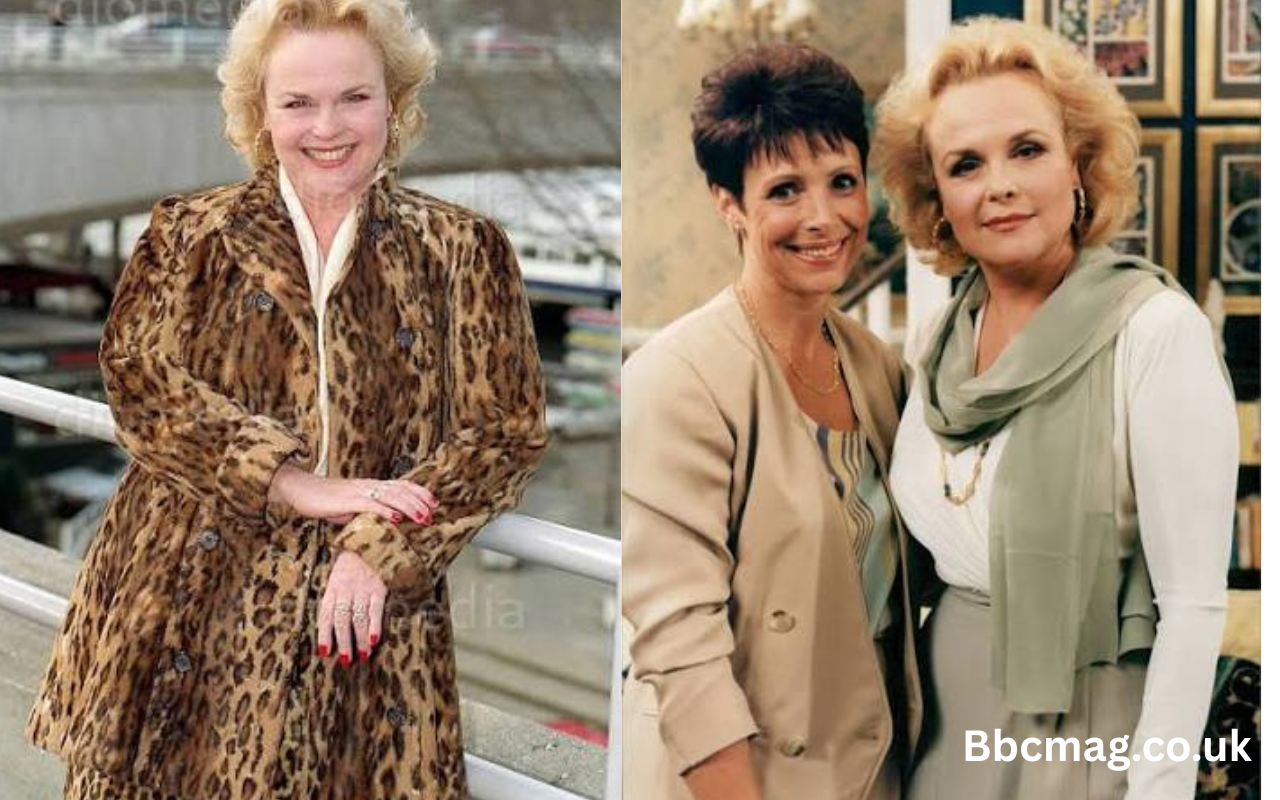
Early Life and Childhood
Sheila Gish was born as Sheila Anne Syme Gash on 23 April 1942 in Lincoln, Lincolnshire, England. She grew up in a military family, as her father served as an Army officer. Because of his profession, the family moved frequently during Sheila’s childhood, living in places including Germany, Egypt, and Sudan before eventually returning to Britain. These early experiences exposed her to different cultures, languages, and lifestyles, helping her develop an open mind and a natural curiosity about people. Rather than seeing constant relocation as a disadvantage, she later reflected that it gave her a broader understanding of human emotions and personalities—qualities that would become invaluable in her acting career.
Table of Contents
ToggleAlthough her childhood involved frequent change, Sheila discovered stability through education and the performing arts. She attended the Royal School for Daughters of Officers of the Army in Bath, where teachers noticed her growing confidence on stage. School productions gave her an opportunity to express herself creatively, and it quickly became clear that acting was more than a hobby. She enjoyed literature, drama, and public performance, gradually developing the confidence to pursue acting professionally. Her early exposure to theatre inspired dreams that would later shape the direction of her life.
Determined to turn her passion into a career, Sheila enrolled at the prestigious Royal Academy of Dramatic Art (RADA) in London. Graduating in 1962, she received professional training in classical theatre, voice projection, stage movement, and dramatic interpretation. RADA not only sharpened her technical abilities but also introduced her to Britain’s vibrant theatrical community. It was here that she laid the strong foundation that allowed her to become one of the country’s most respected stage actresses.
Beginning an Acting Career
After leaving RADA, Sheila Gish began working in repertory theatre, a traditional training ground where actors performed multiple productions throughout the year. Working in repertory demanded versatility, discipline, and quick adaptation, as performers often switched between completely different characters within days. These challenging years strengthened Sheila’s confidence and taught her the value of preparation, teamwork, and consistency. Rather than chasing instant fame, she focused on improving her craft with every performance.
One of her earliest professional opportunities came at Pitlochry Festival Theatre in Scotland. There she played a variety of youthful and comedic roles, allowing audiences and directors to notice her impressive range. Despite often being cast because of her graceful appearance, Sheila refused to be limited to one type of character. She embraced dramatic, humorous, and emotionally demanding roles alike, steadily building a reputation as a dependable and gifted performer.
Her breakthrough in London’s West End arrived when she starred as Bella in the musical Robert and Elizabeth. The production introduced her to a wider theatre audience and established her as a rising talent within British theatre. While the role brought greater visibility, Sheila remained committed to choosing meaningful performances instead of simply seeking commercial success. This thoughtful approach became a defining feature of her long career.
Sheila Gish’s Rise to Fame in Theatre
Sheila Gish became one of Britain’s most admired stage actresses because of her remarkable ability to transform herself into every character she played. During the 1970s, her career gathered momentum as she appeared in increasingly ambitious theatre productions across London’s West End. Rather than relying on glamour or celebrity appeal, she built her reputation through disciplined performances, emotional honesty, and an exceptional understanding of dramatic storytelling. Directors quickly realized that she could handle both comedy and tragedy with equal confidence, making her one of the most dependable performers of her generation.
A defining moment arrived in 1976 when she starred in Alan Ayckbourn’s Confusions at London’s Apollo Theatre. In the production, Sheila portrayed four completely different women—Rosemary, Bernice, Councillor Mrs. Pearce, and Doreen—each with a unique personality, voice, and emotional depth. Her remarkable versatility impressed critics and audiences alike, earning her the prestigious Clarence Derwent Award for Best Supporting Actress. The success of Confusions established Sheila as one of Britain’s leading stage performers and demonstrated that she possessed extraordinary range beyond traditional leading-lady roles.
Throughout the following decades, she remained deeply committed to theatre, choosing challenging productions over commercially safe projects. She delivered memorable performances in classics by William Shakespeare, Anton Chekhov, Tennessee Williams, and contemporary playwrights. Theatre critics frequently praised her intelligence, expressive voice, and emotional precision, while fellow actors admired her professionalism and generosity during rehearsals. By the late 1980s, Sheila Gish had become one of the most respected names in British theatre, admired not only for her talent but also for her unwavering commitment to artistic excellence.
Television Success and Memorable Screen Roles
Although theatre remained her greatest passion, Sheila Gish enjoyed an impressive television career spanning more than three decades. British television during the 1960s, 1970s, and 1980s produced numerous historical dramas, literary adaptations, detective series, and family dramas, providing outstanding opportunities for classically trained actors. Sheila became a familiar face on British television, appearing in productions that showcased her remarkable ability to portray elegant aristocrats, compassionate mothers, mysterious women, and emotionally complex characters with equal conviction.
One of her earliest major television roles came in The First Churchills (1969), where she portrayed Mary of Modena, bringing dignity and emotional depth to the historical character. Over the years she appeared in many popular British television productions, including The Sweeney, Tales of the Unexpected, Inspector Morse, The House of Eliott, Jonathan Creek, The Thin Blue Line, and Love in a Cold Climate. Each appearance demonstrated her remarkable versatility, allowing her to move effortlessly between historical drama, mystery, comedy, and literary adaptations. Audiences appreciated her ability to make even supporting characters memorable through subtle, believable performances.
Among her later television highlights was her unforgettable portrayal of Lady Montdore in the acclaimed adaptation of Love in a Cold Climate (2001). Critics praised her commanding performance, noting how she balanced wit, sophistication, and emotional complexity. Throughout her television career, Sheila never sought celebrity status; instead, she focused on delivering authentic performances that served each story. This dedication earned lasting respect from producers, directors, and viewers alike, making her one of British television’s most reliable and admired actresses.
Film Career and International Recognition
While Sheila Gish devoted much of her career to the stage, she also built an impressive film portfolio that introduced her talent to audiences beyond the United Kingdom. Although she appeared in fewer films than many of her contemporaries, each project reflected her preference for meaningful storytelling over commercial popularity. Her film performances consistently displayed the same emotional depth and professionalism that had already earned her widespread recognition in theatre.
One of her best-known film roles came in the fantasy adventure Highlander (1986), where she portrayed Rachel Ellenstein, the loyal friend of Connor MacLeod. The film became an international cult classic, introducing Sheila to audiences around the world. She later reprised the same role in Highlander: Endgame (2000), reconnecting with fans of the franchise many years later. Although fantasy was far removed from her usual theatrical work, Sheila brought warmth, compassion, and emotional authenticity to the character, helping Rachel become one of the franchise’s most memorable supporting figures.
Her film credits also include acclaimed productions such as A Day in the Death of Joe Egg (1972), Hitler: The Last Ten Days (1973), Quartet (1981), and Mansfield Park (1999), where she portrayed the memorable Mrs. Norris in the Jane Austen adaptation. Critics often remarked that even when her screen time was limited, Sheila managed to leave a lasting impression through her expressive acting and careful attention to character. Although cinema was never her primary focus, her contributions enriched every production in which she appeared and further strengthened her reputation as one of Britain’s finest character actresses.
Awards, Recognition, and Career Highlights
Sheila Gish earned enormous respect throughout the British entertainment industry, not because she chased fame, but because she consistently delivered performances of exceptional quality. Over more than three decades, she became known as an actress who could bring intelligence, emotional honesty, and remarkable depth to every role. Directors frequently cast her in demanding productions because they trusted her ability to understand complex characters, while audiences admired the natural authenticity she brought to both classical and contemporary stories. By the 1990s, she had firmly established herself as one of Britain’s finest stage actresses, with an impressive reputation that extended across theatre, television, radio, and film.
The greatest recognition of her career came in 1996, when she received the Laurence Olivier Award for Best Supporting Performance in a Musical for portraying Joanne in Stephen Sondheim’s Company. Directed by the young Sam Mendes at the Donmar Warehouse before transferring to the West End, the production became one of London’s most celebrated theatrical successes. Sheila’s unforgettable performance of the famous song “The Ladies Who Lunch” showcased her emotional power, comic timing, and commanding stage presence. Winning Britain’s highest theatre honour confirmed what critics had believed for years—that Sheila Gish belonged among the country’s greatest performers.
Throughout her career, she collected numerous other achievements that reflected her artistic excellence rather than commercial popularity.
Career highlights include:
- Laurence Olivier Award winner for Company (1996)
- Clarence Derwent Award for her outstanding performance in Confusions
- Leading performances at the National Theatre, Royal Court Theatre, Donmar Warehouse, and London’s West End
- Acclaimed performances in The Seagull, Suddenly Last Summer, Les Parents Terribles, and Company
- Memorable television appearances in Love in a Cold Climate, Jewels, The First Churchills, and Inspector Morse
- International film recognition through Highlander, Quartet, and Mansfield Park
These accomplishments reflected a career built on artistic integrity rather than celebrity status, making Sheila Gish one of the most respected actresses of her generation.
Personal Life, Marriage, and Family
Away from the spotlight, Sheila Gish valued family life just as deeply as her acting career. In 1964, she married fellow actor Roland Curram, and together they welcomed two daughters, Lou Gish and Kay Curram. Both daughters later followed their parents into the acting profession, continuing the family’s strong connection to the performing arts. Although Sheila and Roland divorced in 1985, they maintained a respectful relationship, particularly for the sake of their children. Friends often described Sheila as a caring mother who encouraged her daughters to develop their own identities rather than simply following in her footsteps.
A new chapter began later in 1985 while filming the BBC adaptation of An Uncertain Feeling, where Sheila met Scottish actor Denis Lawson. Their friendship gradually developed into a long-term relationship built on mutual respect, shared artistic interests, and genuine companionship. The couple remained together for nearly twenty years before marrying in Antigua in March 2004. Their wedding came after many years of partnership and symbolized a deeply rooted bond that had grown stronger through life’s successes and challenges.
Those closest to Sheila often remembered her not only as a remarkable actress but also as a warm, intelligent, and generous person. Despite the pressures of a demanding career, she remained approachable and supportive of colleagues, particularly younger performers entering the profession. She believed that theatre was a collaborative art, and many actors later spoke of her kindness during rehearsals and performances. Her personal life reflected the same grace and professionalism that audiences witnessed on stage, earning admiration both inside and outside the entertainment industry.
Courage During Her Battle with Cancer
One of the most inspiring chapters of Sheila Gish’s life came during her battle with cancer. In 2002, she was diagnosed with a rare and aggressive form of facial skin cancer. The disease eventually required surgeons to remove her right eye in 2003, a devastating experience for anyone, especially an actress whose career depended heavily on public appearances and live performances. Many assumed her acting career would end, but Sheila refused to let the illness define her future.
Instead of retiring, she returned to the stage wearing an eye patch while portraying Arkadina in Anton Chekhov’s The Seagull at the Chichester Festival Theatre. Audiences were deeply moved by her determination, and critics praised not only her courage but also the extraordinary quality of her performance. Rather than distracting viewers, the eye patch became a symbol of resilience, demonstrating that true acting comes from emotional truth rather than physical appearance. Her ability to continue performing under such difficult circumstances earned even greater respect from fellow actors and theatre lovers alike.
Sadly, Sheila Gish passed away on 9 March 2005 in Camden, London, at the age of 62, following her long battle with cancer. Even during her final months, she remained active in the performing arts, with one of her last professional appearances being a BBC Radio production. Her determination to continue working despite serious illness left an unforgettable impression on the British theatre community. Today, she is remembered not only for her extraordinary talent but also for the remarkable strength and dignity she displayed throughout her final years.
Net Worth and Sources of Income
Throughout her long career, Sheila Gish earned a comfortable living through consistent work in theatre, television, film, and radio rather than through blockbuster salaries or commercial endorsements. Unlike many modern celebrities, actors of her generation relied primarily on acting contracts, touring productions, and broadcasting work. Sheila’s reputation for professionalism meant she was regularly cast in prestigious productions, ensuring a steady career that lasted for more than three decades. While she was never known for extravagant wealth, she enjoyed financial stability through continuous work in Britain’s highly respected performing arts industry.
Although no official financial records were ever made public, several entertainment publications estimate that Sheila Gish’s net worth at the time of her death was approximately $1 million to $3 million. These estimates should be viewed as informed approximations rather than verified figures. Much of her earnings came from West End theatre productions, television dramas, feature films, BBC radio performances, and occasional international projects. Winning prestigious awards and maintaining a successful stage career also increased her professional value, allowing her to work consistently with leading directors and production companies throughout the United Kingdom.
Her income can generally be attributed to several major sources:
- Stage performances in London’s West End, National Theatre, Royal Court, and regional theatres.
- Television appearances in BBC and ITV dramas, literary adaptations, and mini-series.
- Feature films, including Highlander, Quartet, and Mansfield Park.
- Radio productions, particularly with BBC Radio.
- Royalty payments and repeat television broadcasts, which continued to showcase her work long after the original productions aired.
Rather than pursuing commercial endorsements or business ventures, Sheila devoted nearly her entire professional life to acting, making her wealth a reflection of artistic achievement rather than celebrity branding.
Social Media Presence and Public Image
Sheila Gish belonged to a generation of actors whose careers flourished long before the arrival of social media. As a result, she never maintained official accounts on Instagram, Facebook, X (formerly Twitter), LinkedIn, or TikTok. Her relationship with audiences was built through live theatre performances, television broadcasts, magazine interviews, newspaper features, and public appearances rather than digital platforms. Today, while many celebrities interact with fans daily online, Sheila’s legacy continues through archived performances, documentaries, theatre publications, and fan communities that celebrate her remarkable body of work.
Even without social media, Sheila enjoyed enormous respect among audiences and fellow performers. She became known for her quiet professionalism, thoughtful interviews, and genuine passion for acting. Unlike many public figures who actively sought publicity, she preferred letting her performances speak for themselves. Directors often praised her dedication during rehearsals, while critics admired her ability to disappear completely into every character she portrayed. This understated approach helped establish an enduring reputation based on talent rather than media attention.
Today, admirers continue to celebrate Sheila Gish through online film databases, theatre archives, streaming services, and tribute articles. Many younger actors discover her work through classic British television series and acclaimed stage productions that remain influential within acting schools and theatre circles. Although she never experienced the era of social media, her artistic legacy continues to reach new audiences around the world through digital preservation and renewed interest in classic British drama.
Legacy, Influence, and Lasting Impact
Sheila Gish’s influence extends far beyond the impressive list of productions in which she appeared. She represented the very best traditions of British acting—careful preparation, emotional honesty, technical excellence, and complete dedication to storytelling. Throughout her career, she proved that lasting success does not depend on constant publicity or commercial fame. Instead, she demonstrated that consistent excellence, artistic integrity, and respect for the craft create a reputation that endures for generations. Her performances continue to be studied by drama students and admired by theatre professionals as examples of intelligent, emotionally truthful acting.
Her courageous response to illness further strengthened the admiration she received throughout the theatre community. After losing her right eye to cancer in 2003, Sheila refused to allow physical adversity to end her career. Returning to the stage wearing an eye patch, she delivered performances that critics described as deeply moving and emotionally powerful. Her determination reminded audiences that genuine artistry comes from commitment, imagination, and inner strength rather than outward appearance. This remarkable resilience became one of the defining aspects of her legacy and continues to inspire performers facing personal challenges of their own.
More than two decades after her passing, Sheila Gish remains one of Britain’s most respected actresses. Her work lives on through classic films, acclaimed television dramas, and memorable theatre productions that continue to reach new generations of viewers. She is remembered not only for her extraordinary talent but also for her kindness, professionalism, generosity toward fellow actors, and unwavering love for the performing arts. As theatre historians continue to celebrate the outstanding performers who shaped modern British drama, Sheila Gish’s name remains firmly among them—a performer whose influence extends far beyond the stage on which she stood.
